





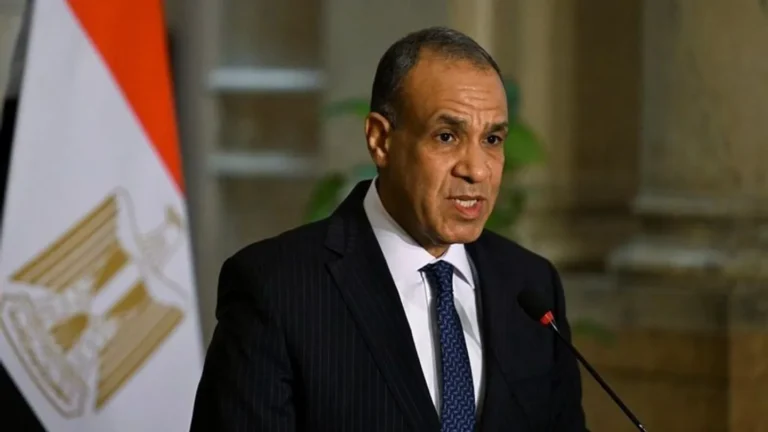
Cairo is intensifying consultations with Arab capitals and reviving the idea of a joint military force to contain the spiraling tensions across the Middle East.
Egypt has launched in recent days a series of diplomatic initiatives aimed at containing the escalation of tensions in the Middle East and strengthening coordination among Arab states.
President Abdel Fattah Al-Sisi has held a succession of phone calls with several regional leaders — including Qatari Emir Tamim bin Hamad Al Thani, Jordan’s King Abdullah II and UAE President Mohammed bin Zayed Al Nahyan — to explore ways of preserving regional stability.
In these exchanges, the Egyptian head of state condemned Iranian strikes targeting several Arab countries and reaffirmed Egypt’s solidarity with the Gulf states. He stressed that the security of Arab nations is a direct extension of Egypt’s own national security, and called for closer coordination to prevent a broader regional conflict.
In a separate call with Iranian President Masoud Pezeshkian, Al-Sisi also reiterated Egypt’s rejection of strikes against Arab states, noting that these countries had taken no part in military operations against Iran and were committed to a diplomatic resolution of the crisis.
In parallel, Egyptian diplomacy has stepped up its engagement on the regional front. Foreign Minister Badr Abdelatty launched a Gulf tour on March 15, starting in Doha before moving on to the United Arab Emirates and Oman. The initiative is aimed at reinforcing coordination between Arab capitals and reviving the concept of a joint Arab force, designed to ensure collective security in an increasingly unstable regional environment.
According to Egyptian political scientist Hassan Salama, the proposal to establish an Arab force could serve as an instrument to protect regional interests and a vehicle for gradually building a collective defense framework comparable to a regional military alliance. However, the prospect remains politically complex, as several Gulf states have in recent years developed security partnerships with outside powers — making the emergence of a single military leadership a difficult prospect.
The idea of collective Arab defense has deeper historical roots. The Arab Joint Defense and Economic Cooperation Treaty, signed in Alexandria in 1950, already provided for military coordination among Arab League member states and stipulated that an attack on one would be considered an attack on all. In practice, that mechanism has never been fully activated.
This diplomatic mobilisation comes against a particularly fraught regional backdrop. American and Israeli strikes against Iran have been met with Iranian missile and drone retaliatory attacks targeting several Gulf countries, heightening the risk of a full-scale regional conflagration. Cairo’s objective is to prevent a military spiral that could destabilise the region’s economic and strategic foundations.
President Al-Sisi also drew attention to the direct economic consequences of these tensions, pointing in particular to disruptions to maritime trade and the loss of approximately $10 billion in Suez Canal revenues in recent years. Against this backdrop, Egypt is seeking to combine diplomatic mediation, security coordination and regional leadership in order to contain the spread of the conflict and preserve the strategic balance across the Middle East.
MK/AK/te/lb/as/APA