





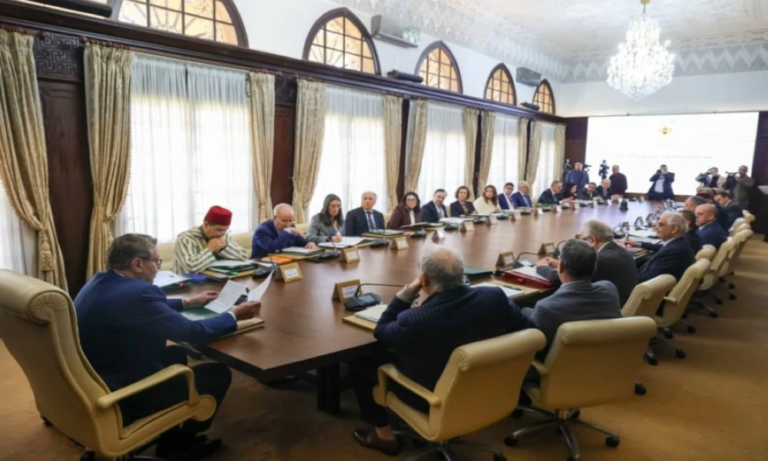
Morocco continues to demonstrate strong economic momentum despite the international environment marked by geopolitical crises and market uncertainties, according to the latest economic indicators presented Thursday in Rabat at the Government Council meeting.
In a global context characterised by a succession of economic and geopolitical shocks, the Moroccan economy is maintaining a sustained growth trajectory and relatively stable macroeconomic balances.
The authorities highlighted the Kingdom’s ability to transform crises into opportunities for reform, relying on an economic strategy focused on diversifying the economy, strengthening investment, and consolidating
the foundations of the welfare state.
This economic resilience is also reflected in the assessments of international rating agencies. Moody’s most recent evaluation raised the outlook for Morocco’s sovereign rating from “stable” to “positive,” underscoring the expected improvement in growth, the dynamism of investment, and the continuation of structural reforms aimed at strengthening fiscal performance and diversifying the national economy.
The main macroeconomic indicators at the end of 2025 confirm this trend. Inflation was contained at 0.8%, while the budget deficit was reduced to 3.5% of GDP. At the same time, the Treasury’s debt-to-GDP ratio fell to 67.2%, while foreign direct investment reached 56 billion dirhams, an unprecedented level according to the authorities.
These results contributed to economic growth of 4.8% in 2025, illustrating the Moroccan economy’s capacity to absorb external shocks. The outlook for 2026 also remains positive.
The economy is expected to continue its recovery for a fifth consecutive year, driven primarily by the growth of non-agricultural sectors and a strong rebound in agricultural activity. Projections suggest agricultural growth could approach 15%, supported by improved weather conditions and the recovery of agricultural production chains.
Rainfall recorded in several regions of the Kingdom is expected to contribute to improved yields of cereal crops, staple crops, and livestock, despite flooding that affected some areas in the North and the Gharb region. This development reinforces the strategic role of the agricultural sector in economic growth and in strengthening national food security.
However, this positive momentum is occurring within a still uncertain international environment. Geopolitical tensions in the Middle East, particularly around the Strait of Hormuz, continue to fuel volatility in global energy markets. For an energy-importing economy like Morocco, a sustained surge in oil prices could put pressure on production costs, inflation, and household purchasing power.
In this context, the Kingdom’s economic trajectory depends on the
continuation of structural reforms and on strengthening the attractiveness of the national economy for investors. The authorities believe that consolidating these achievements will allow Morocco to maintain its capacity to adapt to external shocks and preserve the confidence of international markets.
MK/AK/te/fss/gik/APA