





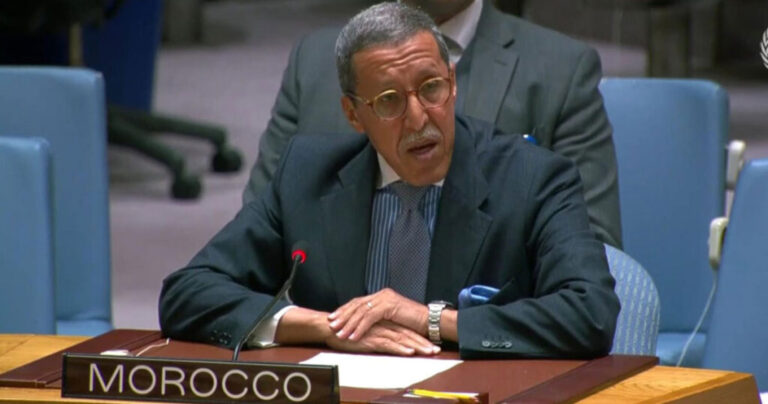
Moroccan Ambassador and Permanent Representative to the United Nations, Omar Hilale, was elected Vice-President of the Third United Nations Conference on Landlocked Developing Countries (LLDCs) on Tuesday.
The conference, taking place this week in Awaza, western Turkmenistan, highlights Morocco’s increasing diplomatic engagement in multilateral forums.
The conference, running from August 5 to 8, gathers the 32 landlocked developing countries and their international partners. Its primary objectives are to review the progress of the Vienna Programme of Action (2014-2024) and to adopt a new 10-year action plan. Ambassador Hilale hailed his election as a recognition of Morocco’s diplomatic role in South-South cooperation, stating that this position will enable the Kingdom to “actively participate in substantive discussions and parallel meetings.”
Addressing challenges and Morocco’s initiatives
Landlocked countries, which account for nearly 9 percent of the world’s population and approximately one-sixth of UN membership, continue to face significant challenges. These include high trade costs, limited access to regional infrastructure, and structural logistical hurdles, all of which impede their economic development.
The conference aims to produce a renewed political declaration and a comprehensive action plan focused on improving physical and digital connectivity, attracting investment in logistics corridors, facilitating cross-border trade, and strengthening institutional capacities. Various donor countries, UN agencies, and regional institutions are participating in these efforts.
Ambassador Hilale took the opportunity to reiterate Morocco’s commitments to the Sahel countries, notably through two flagship initiatives championed by King Mohammed VI: This program aims to provide maritime access to landlocked West African countries via Moroccan port infrastructure. Presented as a strategic lever to strengthen regional integration and support the resilience of landlocked states.
Morocco’s high-level participation at this conference underscores the Kingdom’s continued diplomatic investment in issues related to Africa, interregional cooperation, and sustainable development. Its selection as a vice-president also reflects a broader trend of diversifying regional leadership within the multilateral system.
MK/ac/Sf/fss/abj/APA