



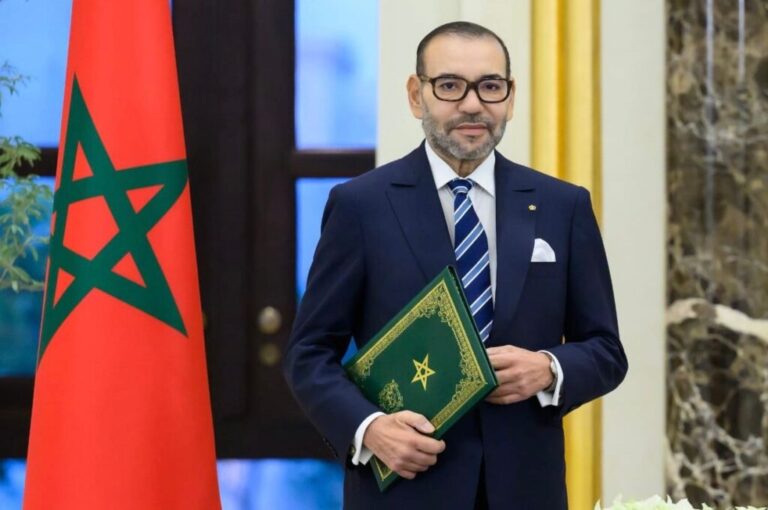
As Morocco celebrated the 26th anniversary of King Mohammed VI’s enthronement on July 29, 2025, the annual Throne Day celebrations once again underscored a key pillar of Moroccan diplomacy: a resolute focus on Africa.
Far more than a mere monarchical observance, this occasion has evolved into a powerful platform for projecting Morocco’s vision as a rising African power, committed to a model of influence built on investment, stability, and robust South-South cooperation.
Following Morocco’s strategic return to the African Union, the Kingdom’s commitment to continental integration has become increasingly transparent and assertive. This repositioning, ratified in Addis Ababa in January 2017 after a 33-year absence, was a foundational act. As early as 2016, King Mohammed VI famously declared at the 27th African Union Summit in Kigali: “Morocco is African, and it will remain African.” This declaration heralded a new era marked by sustained engagement in pan-African institutions, regional projects, and strategic bilateral partnerships. Since then, royal diplomacy has deepened its African roots through over twenty official visits to sub-Saharan Africa, each trip resulting in agreements spanning banking, agriculture, security, and renewable energy. This consistent diplomatic presence reflects a desire for strong personal relationships among African heads of state.
Action-oriented diplomacy: Investment, connectivity, and co-development
The unique aspect of Morocco’s approach lies in the strong link between its diplomatic ambitions and economic expansion. Consolidated figures for the first half of 2025 show that over 70 percent of Moroccan foreign direct investment (FDI) is directed towards Africa, with a cumulative total exceeding $5 billion over the last decade. This positions Morocco as the second-largest African investor on the continent, behind South Africa.
This strategy leverages various economic instruments, including: Casablanca Finance City, now hosting over 240 international companies with a pan-African focus. Moroccan banking subsidiaries like Attijariwafa Bank, BOA, and Banque Populaire, which operate in more than 20 African countries. OCP Africa, whose ammonia plant in Nigeria produces over one million tons annually.
Through these channels, Morocco fosters integrated value chains, stabilizes partnerships, and promotes a practical, results-oriented diplomacy that transcends mere rhetoric. This “project diplomacy” is evident in flagship initiatives such as the Nigeria-Morocco gas pipeline, a 6,800-kilometer project crossing eleven countries. Estimated at $25 billion, it symbolizes a strategic ambition for South-South connectivity, addressing both the continent’s energy needs and European demand. Similarly, the Nador West Med LNG terminal, the Dakhla industrial zone, and power cables connecting the Sahara to the north of the Kingdom reflect a vision centered on the flow of resources, goods, and data.
The Atlantic Initiative: A strategic corridor and regional catalyst
Launched in 2023, the Atlantic Initiative further solidifies this vision by reconfiguring the West African coast into an integrated space for trade, mobility, and security. With the city of Dakhla, its deep-water port, and free trade zone serving as its hub, the project now unites several Sahelian countries (Burkina Faso, Mali, Niger)—which have notably withdrawn from ECOWAS—alongside Ghana, Sierra Leone, and Guinea-Bissau. The initiative aims to transform the continent’s geography by providing landlocked countries with crucial access to the Atlantic, while reinforcing Morocco’s role as a logistics hub connecting Africa, Europe, and the Americas.
However, this ambitious project, while welcomed in many pan-African circles, also faces challenges. Algeria, for instance, views it as an attempt to extend Moroccan influence over West Africa and has proposed its own trans-Saharan gas pipeline project in response. Concerns also persist regarding financing stability and the absence of a robust multilateral mechanism, which could pose risks to security in the Sahel. The ultimate success of the Atlantic Initiative will depend on its ability to establish inclusive governance, secure stable funding, and deliver tangible benefits for the local populations.
Sahara: A lever for regional integration and credibility
At the heart of Morocco’s diplomacy in sub-Saharan Africa, the Sahara issue has evolved beyond a mere territorial dispute. It has become a powerful lever for regional integration and a guarantor of credibility. Between 2019 and 2025, no fewer than 27 African consulates have officially opened in Laayoune and Dakhla, clearly demonstrating growing diplomatic support for the Moroccan autonomy plan. The Sahara is also a focal point for investment, with ports, industrial zones, and logistics infrastructure proliferating, all interlinked with energy corridors and regional connectivity projects. Concurrently, Rabat has bolstered its role in regional security through initiatives like the Marrakech Platform against Terrorism (comprising 30 member countries), military training programs, and intelligence exchanges with Sahelian nations, establishing itself as a credible security hub across the Maghreb, West Africa, and Europe.
Soft power: Sports and spirituality
Morocco’s influence extends beyond economic and security realms. By hosting the Africa Cup of Nations in 2025 and co-organizing the 2030 FIFA World Cup, the Kingdom is projecting an image of modernity, hospitality, and organizational prowess. The future Grand Stade de Casablanca, a massive 115,000-seat complex, symbolizes this ambition, transforming major sporting events into showcases for the nation and catalysts for employment and regional development.
Equally influential, though more discreet, is Morocco’s religious and educational diplomacy. Each year, 12,000 African students receive training in Morocco, accounting for approximately 83 percent of the country’s foreign student population. The Mohammed VI Foundation of African Ulemas unites 1,200 scholars from 40 countries, promoting moderate Islam and training imams in Fez and Rabat. This foundational work grants Morocco recognized spiritual authority, particularly in West Africa, where Maliki Islam is predominant, representing a sustainable soft power built on trust, knowledge, and shared culture.
Looking ahead: Achievements and persistent challenges
As Morocco concludes a decade of intensified African engagement, its diplomacy shows tangible results: increased investments, expanded political support on the Sahara issue, and a consolidated institutional presence. However, challenges persist, including limited penetration in English- and Portuguese-speaking African regions, a reliance on bilateral donors for major projects, and rising uncertainties in the Sahel.
The challenge for the next five years will be one of consolidation: ensuring projects deliver local benefits, broadening the geographic scope of Moroccan influence, and firmly establishing the Kingdom as a key architect of the continental architecture. The success of the Nigeria-Morocco gas pipeline, the effective activation of the Atlantic Initiative, and the post-2030 sporting legacy will serve as crucial tests of credibility. The 2025 Throne Day thus not only crystallizes a decade of African commitment but also projects a vision of Morocco as a central, active player in shaping Africa’s shared future amidst evolving geopolitical dynamics.
MK/ac/Sf/fss/abj/APA