





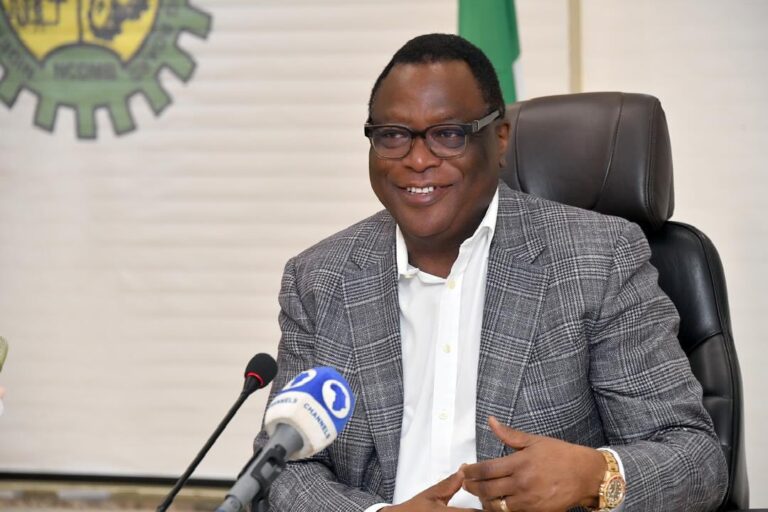
The Executive Secretary of the Nigerian Content Development and Monitoring Board, NCDMB, Dr. Felix Omatsola Ogbe, has called for stronger cross-border collaboration as the cornerstone for advancing local content development in Africa’s energy sector.
Delivering his keynote address at the 10th Anniversary edition of the Sub-Saharan African International Petroleum Exhibition and Conference, SAIPEC 2026, on Tuesday in Lagos, Ogbe described SAIPEC as a critical platform for shaping the continent’s energy future and consolidating the gains made in local content development over the past decade.
Ogbe told policymakers, industry leaders and partners from across Africa and the global energy community attending the conference that the lessons from SAIPEC 2025 underscored the fact that Africa’s local content journey remains a work in progress, stressing that isolated national efforts would be insufficient to achieve meaningful and sustainable outcomes.
“For Africa, collaboration is not optional; it must remain the cornerstone of our strategies,” Ogbe said, adding that collective action was necessary not only to drive progress, but also to consolidate existing gains.
According to him, effective local content development must rest on strong collaboration between governments, the private sector and local communities, which he described as the bedrock of successful energy sector transformation.
Ogbe highlighted Nigeria’s experience, explaining that the country’s local content strategy has followed a deliberate and phased approach; beginning with deepening indigenous participation, followed by capacity building and now strengthened by policies that prohibit the transfer of certifications to intermediaries.
He explained that the new direction is designed to ensure that only competent and capable contractors are engaged, noting that technical competence will now be a critical criterion in project tenders.
At the continental level, he urged African countries to anchor their local content drive on collaboration, leveraging frameworks such as the Brazzaville Accord to promote regulatory harmonisation, sectoral cooperation and an Afro-centric approach to local content development.
He noted that aligning regulatory frameworks and reducing bottlenecks will improve project competitiveness, enhance economic viability and position African energy projects to attract global funding.
Ogbe also described the proposed Africa Energy Bank, being established under the African Petroleum Producers’ Organization, APPO, in partnership with Afreximbank, as a major milestone for the continent’s energy sector.
According to him, the bank is expected to mobilise capital for African energy projects, provide access to more affordable financing, strengthen indigenous industry players and boost capacity development across the continent.
He called on governments, regulators, investors and industry leaders to actively support the operationalisation and success of the Africa Energy Bank as a pathway to unlocking sustainable growth in Africa’s energy industry.
The three-day conference has the theme “Celebrating a Decade of Energy, Oil, and Gas Innovation in Sub-Saharan Africa,” with the keynote focus on “Africa’s Local Content Collaboration Strategy.”
GIK/APA