





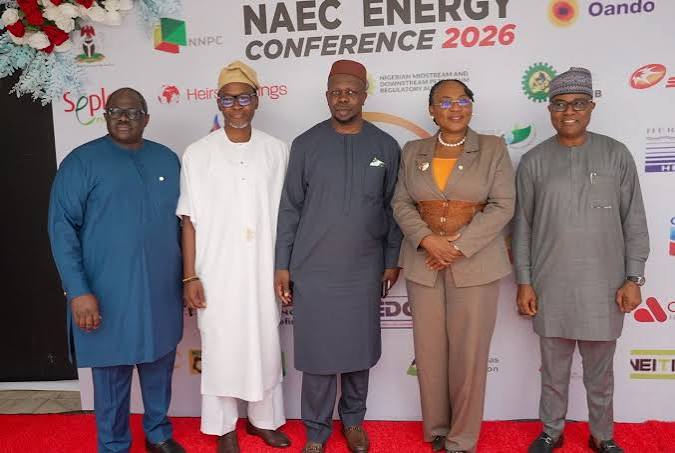
The Nigerian Content Development and Monitoring Board (NCDMB) has called on indigenous oil and gas companies to strengthen their capacity and competitiveness in order to thrive in international markets.
Speaking at the 2026 Energy Conference of the Association of Energy Correspondents of Nigeria (NAEC), in Lagos, the Board’s General Manager, Corporate Communications, Dr. Obinna Ezeobi, identified access to assets, financing, technology and markets as critical drivers of sustainable growth.
He highlighted that the conference theme, “Access to Assets: Empowering Players and Driving Growth,” resonates with the objectives of the Nigerian Oil and Gas Industry Content Development (NOGICD) Act, which is designed to create meaningful opportunities for Nigerians to participate and excel in the industry.
He emphasised that the Nigerian Content 10-Year Strategic Roadmap, launched in 2017, is built on five core pillars and four enabling factors, with the ambitious goal of raising local content participation to 70 per cent by 2027.
The roadmap also seeks to expand access to critical assets for skilled Nigerian professionals, while strengthening the capacity and competitiveness of indigenous operating and service companies.
Dr. Ezeobi highlighted several of NCDMB’s flagship interventions that have enabled Nigerian companies to build capacity, secure financing and gain greater access to opportunities across the oil and gas value chain.
Chief among these is the Nigerian Content Intervention Fund (NCI Fund).
He noted that over 130 indigenous companies have accessed more than US$400 million through the Fund, which is domiciled with the Bank of Industry and NEXIM Bank.
He also referenced Project 100, an initiative designed to support high-potential indigenous companies through capacity development, market access, financial linkages, and tailored business support.
Other key programmes include the Nigerian Content Equipment Certification (NCEC), the Nigerian Oil and Gas Parks Scheme (NOGaPS), and vendor development initiatives—all aimed at deepening local participation and strengthening the competitiveness of Nigerian firms.
Dr. Ezeobi further explained that the Board is facilitating partnerships between Nigerian and foreign companies, while promoting regional collaboration to help local businesses expand beyond national borders.
He expressed satisfaction that Nigerian content in the oil and gas industry has grown from just 5 per cent in 2010 to 61 per cent after 16 years of implementing the Nigerian Content Act.
He stressed, however, that the next phase must focus on equipping indigenous companies with the skills, technology, and business systems required to compete globally.
GIK/APA