



Senegal’s foreign trade saw strong growth in July 2026, driven by crude oil exports.
According to data published by the National Agency for Statistics and Demography (ANSD), Senegal’s exports reached CFAF 668.2 billion during the month, up from CFAF 524.7 billion in June.
This represents a 27.3% increase in a single month.
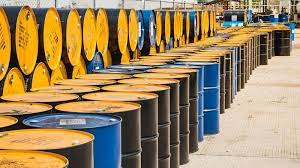
The primary driver of this performance was the dramatic rise in crude oil exports. Their value surged from CFAF 87.7 billion in June to CFAF 273.4 billion in July, playing a decisive role in the overall growth of Senegalese exports.
This upward trend was also supported by increased sales of several other products. Exports of refined petroleum products rose from CFAF 57.2 billion to CFAF 73 billion. Phosphoric acid also saw a marked improvement, with exports climbing from CFAF 7.3 billion to CFAF 19.7 billion.
However, not all exported products saw growth. Sales of liquefied natural gas (LNG) declined, falling from CFAF 45 billion in June to CFAF 29.3 billion in July.
Hydraulic cement also experienced a drop, with exports falling from CFAF 14.9 billion to CFAF 9 billion.
Sales of fresh sea fish likewise decreased, dropping from CFAF 23 billion to CFAF 17.1 billion.
Despite these declines, the overall trend remains strongly positive.
Year-on-year, Senegalese exports grew by 54.7% in July. Since the beginning of the year, they have reached CFAF 3,822.5 billion, compared to CFAF 3,272.2 billion during the same period in 2025 – an
increase of 16.8%.
At the same time, non-monetary gold remains a key component of Senegal’s exports. In July, its export value stood at CFAF 124.7 billion.
It was followed by refined petroleum products (valued at CFAF 73 billion), liquefied natural gas (CFAF 29.3 billion), and phosphoric acid (CFAF 19.7 billion).
Export markets remain diversified.
Switzerland was Senegal’s top customer in July, accounting for 14.9% of exports, ahead of the
Netherlands at 13.9%. Mali followed with 11.8%, trailed by Malaysia (10%), Finland (8.2%), Turkey (8%), and India (4.3%).
The latest ANSD statistics thus reflect the growing importance of hydrocarbons in Senegal’s trade performance.
The rise in exports since the start of the year is now strongly linked to the ramp-up of oil production, while gold, refined products, and other traditional sectors continue to contribute to the country’s foreign earnings.
The continuation of this trend will depend notably on the evolution of hydrocarbon shipments and the ability of other export sectors to maintain their contribution levels.
TE/fss/as/APA