





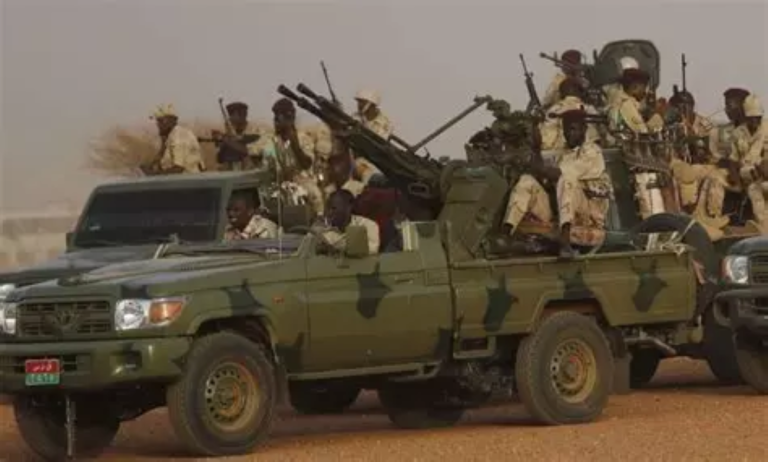
The Rapid Support Forces (RSF) are facing a surge in desertions and defections to the Sudanese army, a trend that could exacerbate the paramilitary group’s challenges as the war between the country’s two main armed forces enters its fourth year.
On August 19, 318 RSF fighters, including four commanders, announced their defection to the Sudanese Armed Forces (SAF) in Northern State. The defectors reportedly joined the army with dozens of vehicles, dealing another blow to the forces led by General Mohamed Hamdan Dagalo, known as Hemedti.
This wave of defections follows similar occurrences in recent months. In June, several dozen fighters had already left the RSF, amid reported losses of personnel and equipment on various fronts. Analysts suggest that the erosion of manpower and material is beginning to strain the paramilitary group’s operational capabilities.
A War Born of a Power Struggle
The Sudanese conflict erupted on April 15, 2023, in Khartoum, stemming from a rivalry between Army Chief General Abdel Fattah al-Burhan and RSF leader Hemedti. Despite sharing power following the 2019 ouster of President Omar al-Bashir, the two leaders clashed over control of the security apparatus and, crucially, the proposed integration of the RSF into the regular army.
Clashes rapidly spread from Khartoum across Darfur, Kordofan, and other regions, evolving from a dispute between two security arms into a full-scale national war involving multiple armed groups and militias.
After more than three years of fighting, a lasting political settlement remains elusive. While the army has regained control of Khartoum and several strategic areas, the RSF maintains a strong foothold in the west, particularly in Darfur and parts of Kordofan.
Catastrophic Human and Humanitarian Toll
Determining the exact death toll remains difficult due to intense fighting and restricted access to conflict zones. Estimates vary significantly: ACLED recorded 52,904 conflict-related deaths through late June 2026, though broader estimates suggest a far higher figure. The United Nations and humanitarian agencies emphasise that available data likely underestimates the reality.
Mass displacement stands as one of the war’s most devastating consequences. According to UNHCR data updated in early August 2026, over 11.3 million people have been forcibly displaced, including millions of refugees and internally displaced persons. Other humanitarian organisations estimate that nearly 14 million people have fled their homes since the war began.
The conflict has also shattered essential services—notably healthcare—and plunged millions of Sudanese into acute food insecurity, with several regions facing famine or high risk of famine.
Weakening the RSF?
In this context, desertions could signal more than a simple headcount loss for the RSF. The departure of seasoned fighters and commanders bringing their own units and equipment threatens military cohesion and command chains.
Concurrently, the Sudanese army is seeking to capitalise on these defections. It has initiated screening and integration procedures for former RSF fighters after offering a form of amnesty to those abandoning paramilitary ranks.
However, the uptick in defections does not imply an end to the RSF’s military strength. The group retains significant manpower, resources, and strategic strongholds. Nevertheless, these defections serve as a further indicator of attrition in a war that, after more than three years, continues to devastate Sudan and fuel one of the world’s most severe humanitarian crises.
TE/Sf/lb/as/APA