





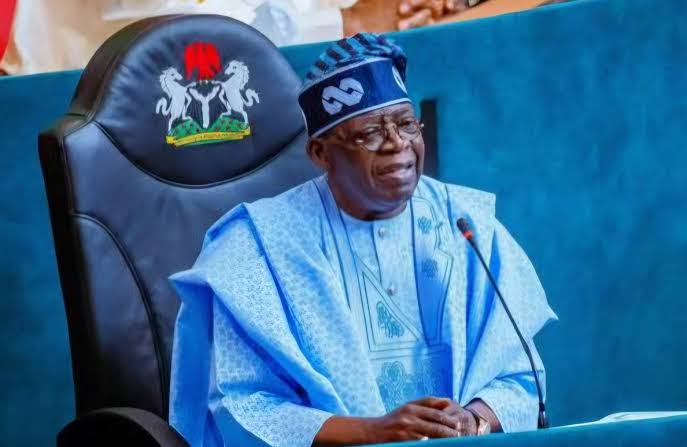
Nigerian President Bola Tinubu says the economic reforms implemented by his administration have corrected Nigeria’s economic direction and laid the foundation for shared and widespread prosperity.
In his Independence Day address to the nation on Thursday to mark Nigeria’s 66th anniversary of independence, Tinubu said that the country had endured war, military rule, economic crises, insecurity and political upheaval since independence, but had remained resilient through the determination of its people.
According to him, Nigeria’s independence carried a larger promise beyond the flag and anthem, as it was meant to give Nigerians the freedom to shape their destiny and build a nation capable of providing opportunity, dignity and a better life.
Tinubu said that successive governments had for too long postponed difficult economic decisions, allowing deep distortions to grow.
“By 2023, poverty was rising, and hope was nearly gone. The country’s situation was darker than ever. We had no choice but to act,” he said.
Tinubu likened Nigeria’s economic situation at the time to a patient diagnosed with cancer, saying the country had to choose between enduring painful treatment or continuing with measures that merely masked its problems.
He said that his administration chose to confront the structural weaknesses in the economy through reforms, despite the difficulties and side effects associated with them.
“Our reforms did not create the weaknesses in our economy. They confronted them,” he said.
Tinubu said that three and a half years into the administration, the country’s economic outlook had improved, with the economy growing by more than four per cent in 2026.
He explained that both the oil and non-oil sectors contributed to the period of stable growth.
According to him, oil theft has declined, inflation has fallen substantially from its peak, foreign reserves have been rebuilt and the foreign exchange market has stabilised.
He added that Nigeria recorded the highest-ever revenue from non-oil exports in 2025, exceeding $6 billion.
“These are not idle claims. International observers, journalists, NGOs and multilateral institutions can see the change,” he said, adding that the government has now moved beyond the emergency phase of economic reform to focus on shared prosperity.
“The emergency treatment is over. The foundation has been repaired. The central economic task before us has changed,” he said.
He added that the administration’s priority will now be to reduce the cost of living by lowering the cost of producing and transporting goods consumed by Nigerians.
The president said the government would expand mechanised irrigation and dry-season farming, improve access to seeds and fertiliser, increase mechanisation and invest in storage and transportation.
He added that the government was building and completing roads, railways and ports to connect farms and factories to markets.
Tinubu said that lower production costs, reduced post-harvest losses, improved electricity supply to manufacturers and faster movement of goods would ultimately translate into lower prices.
He also identified job creation, enterprise and industrial growth as central to the government’s economic agenda.
The Nigerian leader said that the government would use Nigeria’s gas resources to power new industries, support businesses seeking to revive factories, expand digital connectivity and invest in skills required by employers.
He said the government would also support Nigerian businesses with infrastructure and finance to enable them to grow.
“I want to see more Nigerians making things. I want to see more Nigerian farms feeding our cities and supplying our factories.
“I want to see Nigerian businesses selling Nigerian goods to the whole world. I want young Nigerians building unicorns and creating opportunities for others here at home,” he said.
Tinubu acknowledged that millions of Nigerians have continued to struggle with food, school fees, medical bills and transportation costs, recalling that the challenges predated the reforms of the past three years and reflected decades of low productivity, inadequate infrastructure, insufficient opportunities and institutional weaknesses.
“We cannot erase in four years what accumulated over generations. But we can change its course,” he said.
He, however, said that the government was strengthening direct support for poor households and improving the National Social Register to ensure that assistance reached those who genuinely needed it.
He also highlighted the Nigerian Education Loan Fund, saying it was helping children from low-income families pursue higher education despite their parents’ financial limitations.
GIK/APA