





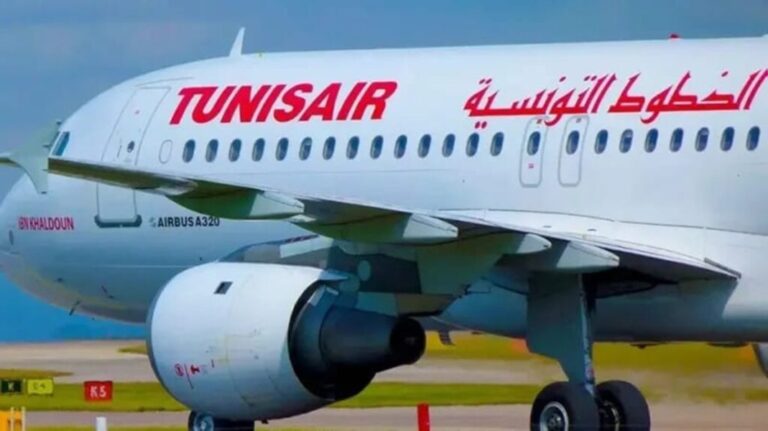
The Tunisian national airline is going through a critical phase, with operational collapse, instability at the top, and a rock-bottom stock market valuation.
Despite a new wave of appointments in early July, doubts remain over its ability to recover.
Tunisair is sinking into a multifaceted crisis. On the eve of the peak summer season, the Tunisian national airline has only ten operational aircraft left, down from 24 previously.
Maintenance delays, internal social tensions, and the inability to operate flights under normal
conditions are shaking one of the historic pillars of Tunisian air transport.
The consequences for travelers are severe: delays of up to 24 hours, flights canceled without clear information, chaotic boarding procedures, and punctuality falling to 48 percent in June 2025. This
figure contrasts with official communications, which prefer to emphasise an improvement compared to 2024.
On the ground, testimonies are piling up: “last-minute flight changes, impossible check-in,
stopovers added without notice,” a passenger at Tunis-Carthage Airport denounced.
This chronic dysfunction reflects persistent managerial instability.
Since November 2024, several executives have succeeded one another at the helm of Tunisair: the abrupt departure of Olfa Hamdi, the appointment and subsequent ouster of Khaled Chelly, and a series of dismissals of directors for serious misconduct.
In early July 2025, a new reshuffle saw the ouster of Habib Mekki from the board of directors, replaced by Tarek Bouazizi.
But this new management, which has its roots in ground transportation, is already attracting harsh
criticism.
Economist Moez Joudi asks: “Is it conceivable to appoint a general manager from ground transportation to head Tunisair?”
Financially, the situation is equally alarming. TAIR shares, listed on the Tunis Stock Exchange, have been stagnating at 0.37 dinars since May, nearing historic lows.
An audit published in January already expressed serious doubts about the company’s continued existence.
Faced with this collapse, President Kais Saied denounced a “financial drain” fueled by “crony hiring.”
He demanded a comprehensive rescue plan. Among the measures put forward: reorganising teams abroad, improving communication with passengers, injecting one billion dinars, reducing staff by 1,000 to 1,700 positions, converting debt into equity, and granting a 30% stake to a strategic partner.
MK/Sf/ac/fss/as/APA