



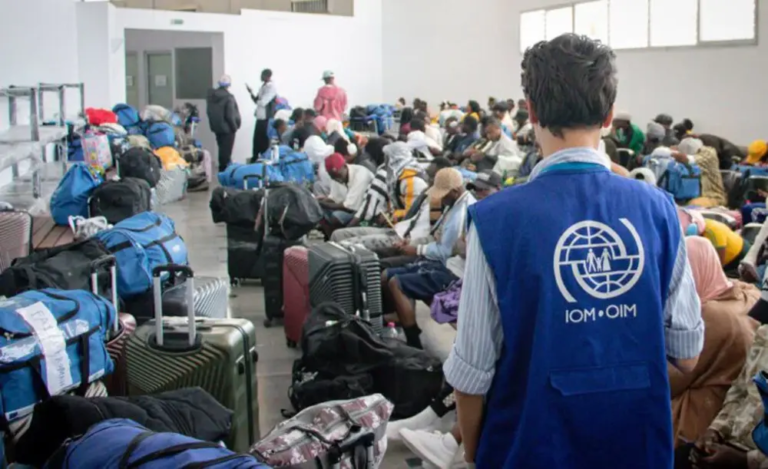
Tunisia has recorded 4,735 voluntary returns of sub-Saharan migrants since July 2025, according to local authorities, amid an intensification of assisted return operations carried out in close coordination with diplomatic missions from countries of origin.
In total, 4,735 migrants in irregular situations have benefited from the voluntary return program since the launch of the first operations on 7 July 2025, said the general supervisor of the Kilometer 21 camp in El Amra, located in the governorate of Sfax. The official figures cover the period up to 14 June 2026.
According to Tunisian authorities, the mechanism is part of assisted voluntary return schemes specifically aimed at facilitating migrants’ safe return to their countries of origin. The supervisor told the TAP news agency that an additional 226 migrants are expected to be processed for return between 13 and 16 June. Currently, the Kilometer 21 camp in El Amra is hosting 574 sub-Saharan migrants who are awaiting the completion of administrative procedures or the final confirmation of their flight schedules. Authorities stated that individual files are actively being prepared and transmitted to the relevant diplomatic missions in order to organize these departures.
In parallel, a new group of migrants traveling from the governorates of Nabeul and Sousse is expected to arrive at the El Amra center, a facility that has become one of the primary transit hubs for voluntary return operations in recent months. Authorities also announced that 51 sub-Saharan migrants left Tunisia on Sunday to head back to their home nations. These departures are part of an accelerated policy enforced since the summer of 2025, unfolding against the backdrop of growing migratory pressure along coastal regions, particularly in the governorate of Sfax, which serves as a key departure point for irregular crossings toward Europe.
Migration remains one of Tunisia’s most pressing socioeconomic and geopolitical challenges. While national authorities have presented these voluntary return programs as an essential tool for managing migration flows, international and humanitarian organizations continue to closely monitor the conditions in which migrants are being hosted throughout the country.
MK/te/lb/abj/APA