





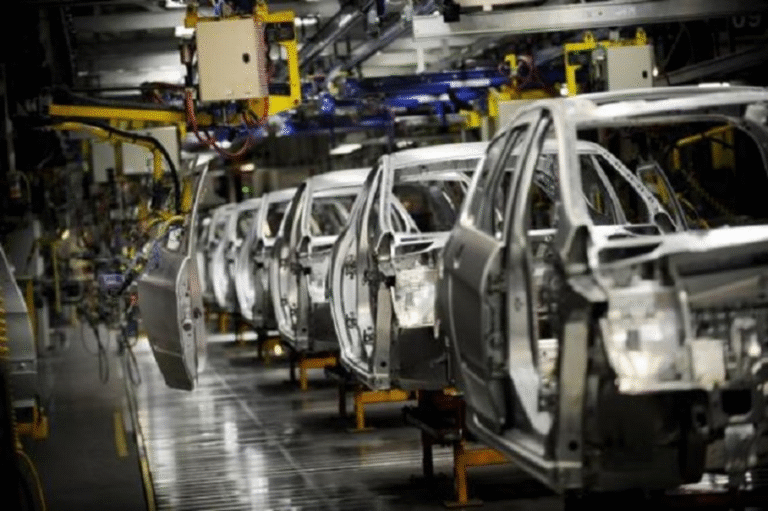
Tunisia’s efforts to establish productive national sovereignty are being undermined by a paradoxical tax system, coupled with cumbersome administration and regulatory instability.
This combination of factors is actively jeopardizing the emergence of a competitive local industry, particularly in the automotive sector.
A recent joint meeting of the Finance and Budget Committees highlighted a core contradiction in Tunisian industrial policy: while the government aims to strengthen local production, the current tax framework structurally favors imported vehicles over those assembled or manufactured domestically.
Industry representatives revealed that cars produced locally are subject to both customs duties and excise taxes on their components. In contrast, vehicles imported by dealerships escape customs duties entirely, being subject only to excise taxes calculated on the port entry price.
This setup places local manufacturers at a significant disadvantage in a small market already weakened by inflation. Industry leaders have demanded immediate tax reform, specifically requesting: A complete exemption from customs duties and consumption taxes on automotive components intended for local production. A reduction in the VAT rate to 7 percent.
For nearly a decade, manufacturers have warned that the persistence of this tax system—designed to boost short-term budget revenues—is preventing the development of a sustainable and competitive sector.
The current tax structure is seen as a striking anomaly, directly contradicting Tunisia’s official ambition to increase its industrial integration rate and attract foreign investors. Elected officials acknowledged this during the November 14, 2025, meeting, stating that “strengthening national autonomy requires supporting Tunisian industry.”
However, these pronouncements clash with economic reality: production volume and employment capacity remain stagnant, revenue is pressured, and the industrial integration rate remains low. The simple economic equation for the promising automotive components sector is that producing in Tunisia is more expensive than importing, despite having a competitive workforce and a strategic geographic location.
Industry stakeholders warn that without urgent, coherent tax reform, Tunisia’s automotive industry risks being relegated to low value-added assembly or subcontracting. This concern is amplified by neighboring countries, notably Morocco, which are successfully consolidating complete value chains, including components, assembly, R&D, and substantial exports to Europe. The lack of regulatory stability and the burdensome administrative environment in Tunisia only heighten the risk to its industrial future.
MK/ac/fss/abj/APA