



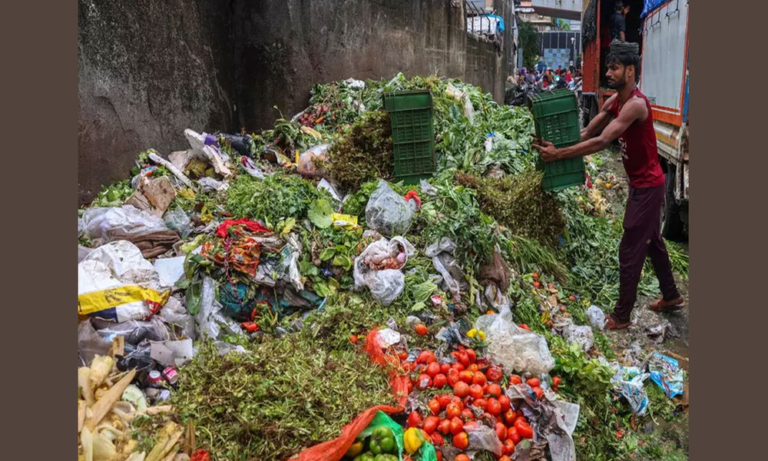
Tunisia ranks second among Arab countries in terms of food waste, with 172 kilograms discarded per person annually — nearly two million tonnes nationwide — according to the 2024 Food Waste Index released by the United Nations Environment Programme.
Data published by the United Nations Environment Programme (UNEP) show that Tunisia leads Maghreb countries on the issue and trails only Egypt at the Arab level. With an annual average of 172 kg per capita, the total volume of food waste in the country is estimated at around two million tonnes.
This level places Tunisia among the region’s most affected states, at a time marked by mounting food security pressures and rising production costs.
Bread, cereals and vegetables are the most frequently discarded products. According to the World Wide Fund for Nature (WWF), the situation represents a major challenge to national food security. The organisation stresses that food waste extends beyond direct economic losses, also resulting in the unnecessary consumption of strategic resources such as water, energy and agricultural land mobilized throughout the production chain.
Globally, food waste accounts for approximately 10 percent of greenhouse gas emissions, according to WWF North Africa. Organic waste, once sent to landfill, generates methane as it decomposes — a greenhouse gas with significant warming potential. This environmental dimension amplifies the scale of the issue beyond its economic and social implications.
In light of these findings, WWF argues that reducing food waste is a critical step toward climate protection and strengthening food resilience. The organisation advocates improved meal planning, more rational purchasing habits, better use of surplus food and the development of organic waste recycling initiatives.
For Tunisia, curbing the phenomenon could represent a strategic lever — both to preserve national resources and to meet its international climate commitments — at a time when the effectiveness of public policies on waste management and responsible consumption remains a central concern.
MK/sf/lb/as/APA