





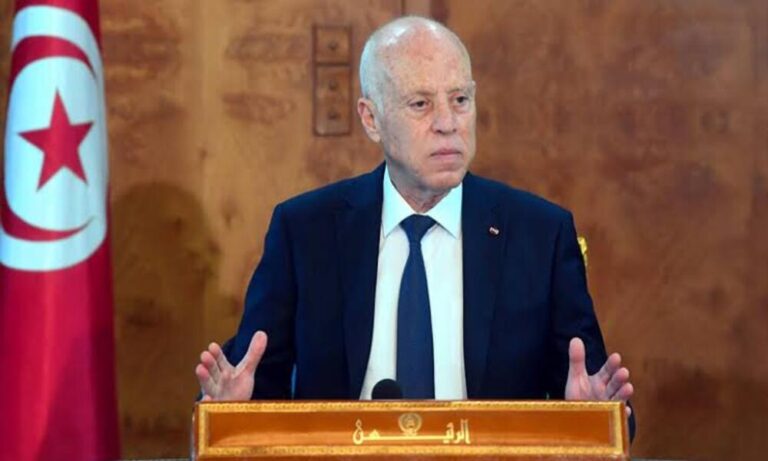
Tunisian President Kais Saied has urged the government and relevant stakeholders to remove the obstacles hindering the activities of small farmers, particularly in the olive oil sector, during a meeting dedicated to food security.
According to an official statement, the Tunisian head of state emphasized the need to facilitate olive processing, storage, marketing, and access to financing, in a context marked by what has been described as a record
harvest.
This stance is part of a now recurring rhetoric from the Tunisian government, which elevates food sovereignty to a pillar of national security.
Kais Saied called for a coordinated mobilization of the public and private sectors, advocated for the opening of new markets, and mentioned setting a reference price guaranteeing farmers “the full extent of their rights.”
He also warned of the risk of some producers abandoning their harvest, emphasizing the strategic importance of olive oil to the national economy.
While the diagnosis of the difficulties faced by small farmers is widely shared, the presidential announcements remained general. No precise timetable or operational mechanisms were detailed regarding the financing lines mentioned or the methods for regulating prices, in a country facing significant budgetary constraints and ongoing financial negotiations with its international partners.
The meeting also highlighted the weakening of public agricultural agencies. The president cited the National Olive Oil Office, whose storage capacity has decreased from 350,000 tonnes in the early 1960s to approximately 90,000 tonnes today.
This decline, deemed unacceptable by Kais Saied, illustrates the structural limitations of the public sector, marked by decades of underinvestment, fragile governance, and the absence of a clear industrial strategy.
Similarly, the head of state has given instructions to guarantee the availability of local seeds and fertilizers in all regions. Here again, the stated objective of equitable access to agricultural inputs is hampered by persistent logistical, financial, and climatic constraints, notably water scarcity and rising production costs.
By reaffirming that Tunisia is capable of fully ensuring its food security, Kais Saied is counting on a proactive state policy and national mobilization. However, in the absence of clearly defined structural reforms, coordination with trade and environmental policies, and a stable framework for cooperation with the private sector, this ambition risks remaining merely rhetoric, without providing a lasting solution to the deep-seated vulnerabilities of Tunisian agriculture.
MK/ac/Sf/fss/gik/APA