





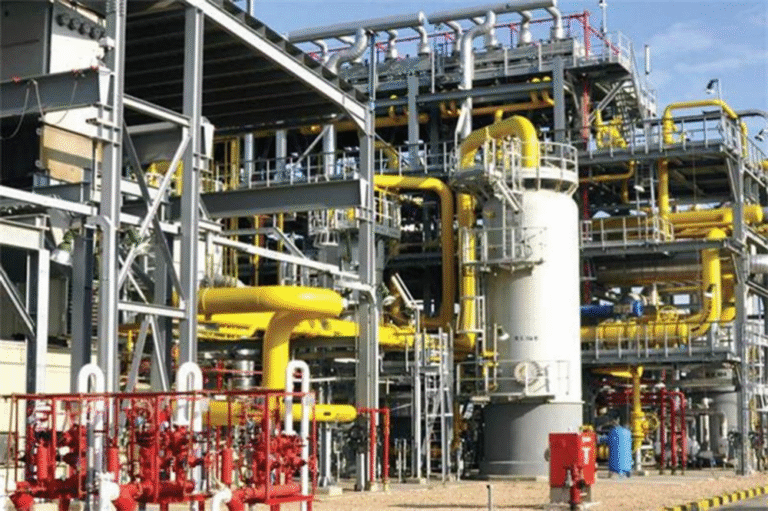
The UK government has withdrawn $1.15 billion in financing for TotalEnergies’ liquefied natural gas (LNG) project in Mozambique, citing heightened security risks.
UK Business Secretary Peter Kyle confirmed the decision on Monday, saying officials had concluded that risks around the project “have increased.”
“After a detailed review, the UK government has decided to end” UK Export Finance’s participation in Mozambique LNG, Kyle said in a statement.
“My officials have evaluated the risks around the project, and it is the view of His Majesty’s Government that these risks have increased.”
UK Export Finance (UKEF) was one of eight export credit agencies backing the $14.9 billion development.
The Mozambique LNG project, led by France oil and gas major TotalEnergies, was once hailed as Africa’s biggest private investment.
It was suspended in 2021 after Islamic State‑linked militants attacked Palma in Cabo Delgado province.
TotalEnergies has since taken steps to restart construction, including securing new financing.
In March, the US Export‑Import Bank approved a $4.7 billion loan, the largest single tranche of support, which chief executive Patrick Pouyanné said allowed shareholders “to move forward with the project.”
The UK withdrawal adds to challenges already facing the venture, including $4.5 billion in costs accrued during the halt and allegations that company‑backed security forces committed abuses near the site.
African energy leaders condemned the decision.
The African Energy Chamber (AEC) said the move undermines energy security and industrial ambitions across the continent.
“Withdrawing support from Mozambique LNG is a betrayal of Africa’s right to energy security and a slap in the face of progress for the continent’s millions living without reliable power,” AEC executive chairman NJ Ayuk said Tuesday.
He said the latest development “should serve as a call to action: it serves as a stark reminder that Africa’s energy future cannot rely solely on foreign financing or conditional support.”
“Mozambique LNG, and projects like it across the continent, must be championed by Africans for Africans, with a focus on responsible development, job creation and the eradication of energy poverty.”
Mozambique LNG is designed to produce 13 million tonnes of LNG annually, with construction expected to create about 5,000 jobs and gas‑liquefaction projects in Cabo Delgado province projected to generate at least 10,000 direct jobs.
Revenues from LNG have already boosted state earnings by more than 20 percent in the past year, according to AEC.
JN/APA