





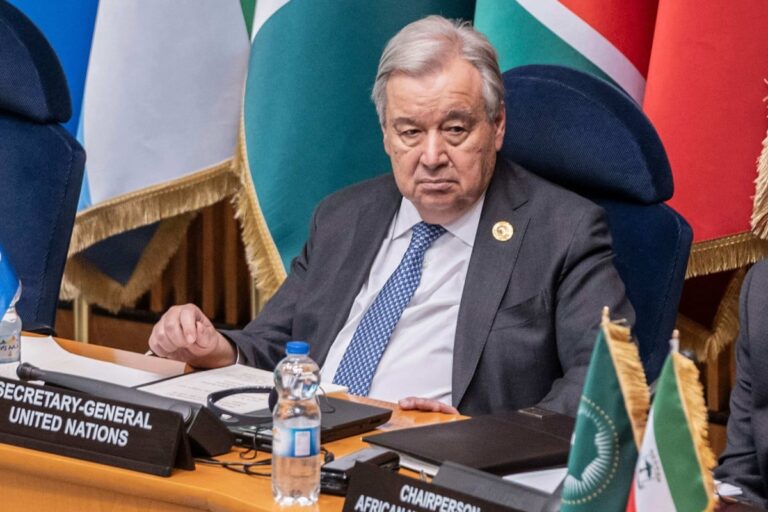
UN Secretary-General António Guterres has called on Ethiopia and Eritrea to recommit to the terms of their longstanding peace accord amid renewed tension between the two horn of Africa nations over a maritime dispute.
The two neighbours who were once part of a greater Ethiopian federation fought a bitter two-year border war which ended in 2000 with the Algiers Agreement.
Eritrea seceded from the rest of Ethiopia in the early 1990s and rendered the latter landlocked, a situation which the authorities in Addis Ababa say is a ‘historcial wrong which ought to be righted’.
Landlocked Ethiopia’s geopolitical game to secure maritime access to the Red Sea has generated tensions with its neighbours Eritrea and Somalia.
In a statement issued over the weekend through his spokesperson Stephane Dujarric, Guterres said the Algiers Agreement is a landmark peace treaty that formally ended the border conflict between Ethiopia and Ertrea and established a crucial framework for peaceful coexistence.
“At a time of renewed tensions, the Secretary-General urges Eritrea and Ethiopia to recommit to the vision of lasting peace and the respect for sovereignty and territorial integrity embodied in the Algiers Agreement and strengthen efforts to build good neighborly relations,” Guterres was quoted as saying.
The call was made as the two countries commemorated the 25th anniversary of the peace deal that ended a brutal conflict between them at the turn of the millennium.
The commemmoration has been marked by growing tension and mutual suspicion aout preparing to return to war.
Tension has escalated between the two old foes as Ethiopia continues to press for access to the Red Sea, where its ambition is to construct a port and establish a military base. Asmara regards this unilateral ambition as encroaching on its territory.
Last month, Ethiopia’s foreign affairs ministry Gedion Timothewos accused the Eritrean government of military provocation with its troops encroaching on Ethiopian territory.
Addis Ababa also accused Asmara of interfering in the internal affairs of Ethiopia by way of forming alliances and backing armed groups fighting the federal government.
Guterres said with the support of the international community, the agreement created mechanisms for demarcating the common border and reaffirmed the fundamental principles of sovereignty and territorial integrity for both nations.
The UN Secretary-General also recalled that seven years ago, the leaders of both countries renewed their commitment to peace through a joint declaration.
He called upon both countries to continue working with regional and international partners to advance development cooperation for the benefit of all.
MG/as/APA