





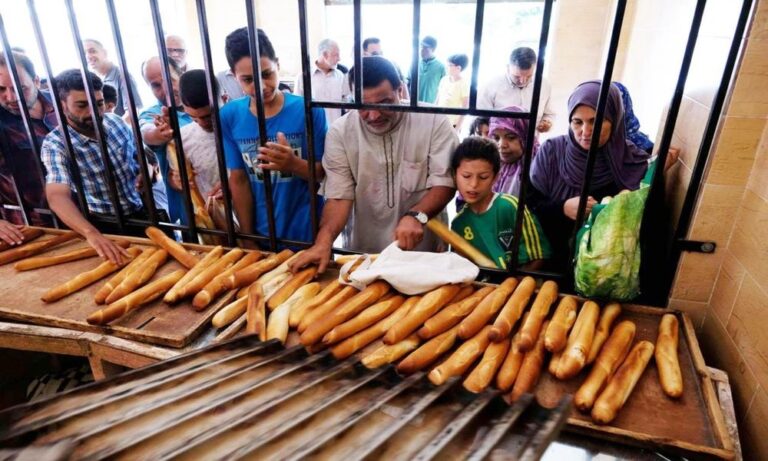
Fuel shortages and rising flour prices could force many Libyan bakeries to suspend operations, while the price of
bread remains unchanged.
The Libyan Bakers’ Union has warned that increased production costs and fuel supply difficulties threaten the survival of many bakeries, which are now faced with the choice of operating at a loss or closing down.
Ali Bouazza, head of the Supreme Bakery Oversight Committee within the Bakers’ Union, told local media that mills and bakeries do not have sufficient fuel to run their generators. As a result, many operators are forced to buy fuel on the parallel market, where prices are significantly higher.
This situation stems in part from the requirement imposed on mills and bakeries to use generators instead of the public electricity grid, in an effort to alleviate the strain on the grid.
According to Ali Bouazza, this measure has led several mills to suspend operations, causing a contraction in the supply of flour on local markets.
The price of one quintal of flour, or 100 kilograms, has thus risen from 190 Libyan dinars in January to 275 dinars currently, representing an increase of nearly 45%.
At the same time, available quantities have decreased, exacerbating tensions throughout the bread production chain.
The union official specified that the price increase also affected yeast, cooking oil, salt, sugar, cleaning products, spare parts, rent, and packaging bags.
Despite this widespread surge in costs, the selling price of a loaf of bread has remained fixed at 0.33 Libyan dinars.
For the Bakers’ Union, maintaining this price is no longer economically viable. Ali Bouazza warned that professionals in the sector had only two options left: keep producing while absorbing increasing losses or close their businesses permanently.
A surge in closures would risk exacerbating the difficulties in obtaining bread, a basic necessity for Libyan households.
MK/AK/Sf/fss/as/APA