



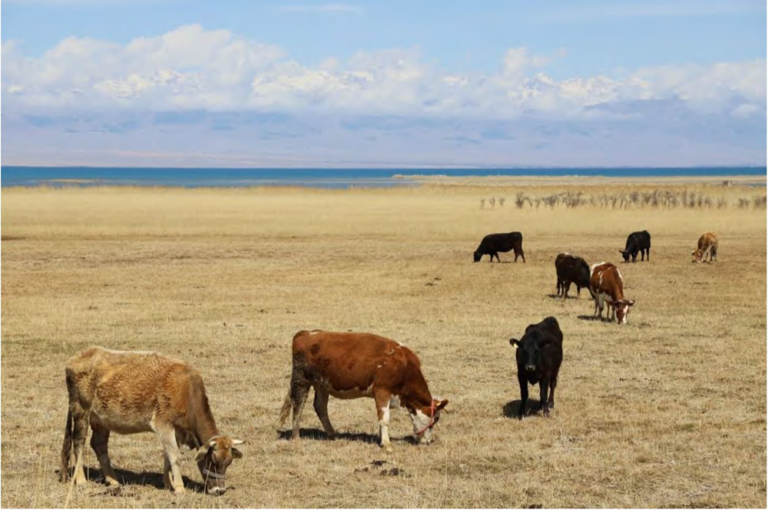
Rangelands cover more than half of the Earth’s land surface and generate between $21 trillion and $47 trillion in annual economic and environmental benefits, yet they remain severely underfunded globally.
According to a joint report presented Monday at the 17th Conference of the Parties (COP17) of the United Nations Convention to Combat Desertification (UNCCD) in Ulaanbaatar, these ecosystems harbor a third of the world’s major biodiversity hotspots and can yield up to $5,000 per hectare each year. Titled Rangelands Rising: Investing in Sustainable Management and Restoration, the publication—co-authored by the International Livestock Research Institute, GIZ, the Economics of Land Degradation Initiative, UNCCD, and the International Union for Conservation of Nature—calls on governments and institutional investors to formally incorporate rangelands into financial and policy frameworks.
The report directly challenges the long-standing assumption that transhumant pastoralism inherently drives land degradation, presenting evidence that well-managed grazing systems actively sustain biodiverse landscapes. In sub-Saharan Africa, pastoralism contributes between 5 and 10 percent of national GDP in several nations and represents 15 to 40 percent of total agricultural value added, delivering critical meat and dairy production on land unsuited for traditional crop farming. Economics strongly favor proactive environmental stewardship; every dollar invested in pasture restoration yields between $4 and $6 in direct returns, skyrocketing to $36 when public benefits such as groundwater replenishment are factored in. Conversely, delayed crisis response imposes immense fiscal burdens, as illustrated by Niger’s 2021 drought relief efforts which absorbed nearly 7 percent of national GDP, whereas early preventative support yields a three-to-one savings ratio against eventual humanitarian expenditures.
Despite their vast economic footprint and carbon sequestration capabilities, rangelands are drastically underrepresented in global climate strategies. While 181 countries feature forests in their official national climate plans under the Paris Agreement, only 24 include rangelands. The authors emphasize that restoring mildly or moderately degraded pastures is highly cost-effective—costing as little as $20 per hectare compared to over $70,000 per hectare for severely damaged land. coincide with the International Year of Rangelands and Pastoralists, the report concludes that unlocking long-term private and public capital requires securing land rights, empowering local community institutions, and ensuring inclusive governance for pastoralist populations.
ARD/ac/Sf/fss/abj/APA