



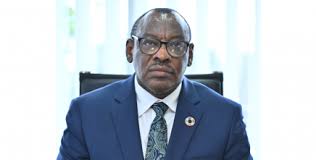
The Executive Secretary of the Economic Commission for Africa (ECA) Claver Gatete called for urgent collective action as Africa faces converging crises, including slow growth, high debt burdens, shrinking concessional financing, and mounting economic uncertainty.
“The question is no longer what to do, but how urgently we can do it,” Gatete said in his address to the African Union Executive Council at the in the 7th African Union Mid-Year Coordination Meeting in Malabo, Equatorial Guinea.
According to ECA’s statement issued on Monday, the Executive Secretary proposed five strategic priorities for Africa’s transformation including accelerating AfCFTA implementation to unlock trade and investment opportunities; de-risking investment to attract long-term financing; developing value chains and Special Economic Zones (SEZs) to boost industrialization and regional competitiveness.
Gatate also proposed the need to digitize taxation and formalize the economy across the continent to increase domestic resource mobilization and productivity and ensure climate resilience to protect growth gains and support sustainable development.
“These are interconnected levers for sustainable growth,” he noted, “and the ECA stands ready to support member states with data, policy tools, and partnerships to build an Africa that is integrated, prosperous, and resilient by design,” he said.
Gatete also held high-level bilateral meetings to deepen collaboration with Equatorial Guinea’s institutions in support of the country’s development goals.
The Executive Secretary concluded his mission by participating in the High-Level Political Dialogue on Economic Transformation, Private Sector Development, and Employment, co-organized by the Economic and Social Development Council of Equatorial Guinea with the UN Resident Coordinator’s office support.
The High-Level Dialogue offered a crucial platform to discuss development challenges and identify opportunities to promote inclusive and sustainable economic transformation.
The Dialogue brought together high-level government officials, business leaders, private sector representatives, development partners, civil society organizations, and academics, signaling a shared commitment to chart a new course for Equatorial Guinea’s sustainable development.
MG/abj/APA