





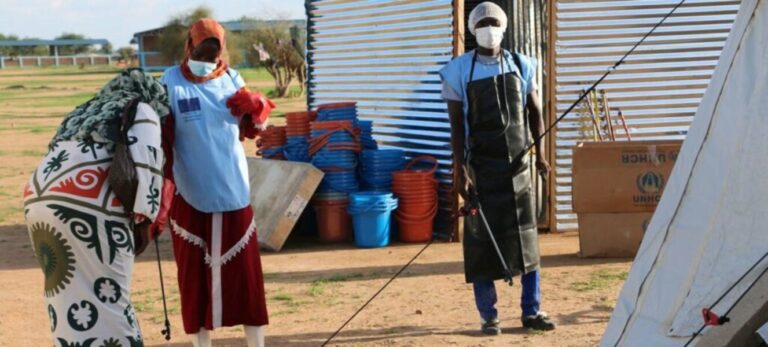
The World Health Organisation (WHO) has warned of a looming public‑health emergency in Southern Africa after 4,320 cholera cases and 56 deaths were reported in the siz weeks between 1 January and 15 February, a more than seven‑fold increase compared with the same period last year.
The spike stands in stark contrast to the rest of the continent where cholera cases have declined by nearly half since 2025.
Thirteen African countries are currently battling outbreaks but southern Africa remains the epicentre, continuing a trend that began during the 2023-2024 cyclone season.
Mozambique accounts for 90 percent of all cases reported in the region so far this year, following intense flooding that has affected more than 700,000 people.
Malawi, Namibia, Zambia and Zimbabwe have also reported infections.
WHO attributed the surge to severe flooding, cyclone damage and collapsing water and sanitation systems in several countries.
Officials said the region’s active cyclone season, which runs from January to April, has intensified vulnerabilities in 27 high‑risk zones across five countries.
Poor water and sanitation infrastructure, recurrent outbreaks and population displacement have created ideal conditions for the disease to spread.
“The sharp rise in cholera cases in southern Africa is a clear reminder of how climate‑related shocks are intensifying public‑health risks,” WHO Africa emergencies director Marie Roseline Darnycka Belizaire said.
She said the organisation is working with governments to strengthen emergency response and build resilience against climate‑linked health threats.
WHO projections indicate that 12,000 to 22,000 additional cases could occur between March and August under the most likely scenarios.
WHO and its partners are delivering medical supplies, supporting disease surveillance and coordinating emergency health responses.
Most cholera cases can be treated with oral rehydration solution but severe infections require urgent intravenous fluids and antibiotics. Delayed treatment can quickly become fatal.
Cholera remains a marker of deep social and economic inequality, with outbreaks closely linked to inadequate water and sanitation systems.
JN/APA