






The Importers Association of Nigeria (IMAN) has warned that the 4 per cent free on-board, FOB levy is estimated to add N4 trillion annually to freight costs-burden that would be transferred directly to consumers.
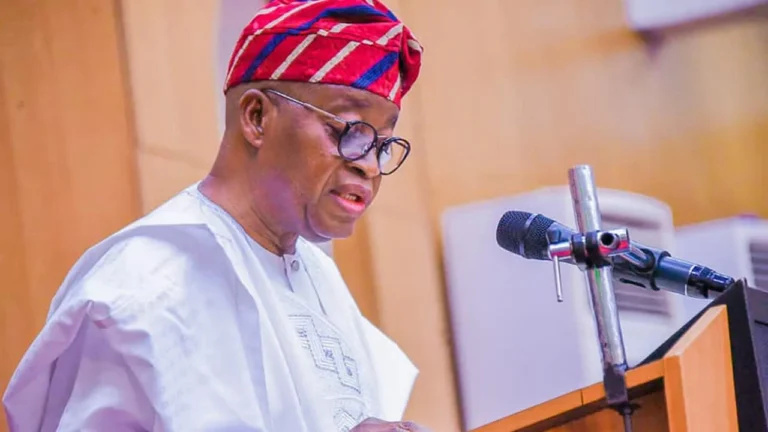
Speaking at its National Executive Committee meeting, the National President/Board of Trustee Chairman, Chief Gilbert Obi, warned that the levy would worsen inflation, disrupt supply chains and hurt productivity.
He added that the Nigerian government’s plan to replace existing port charges with a new 4 per cent FOB levy on import is much higher than the 15 per cent Comprehensive Import Supervision Scheme (CISS) it replaced.
Obi said that peer countries like Ghana maintain just 1 per cent, saying that the new levy would fuel inflation, raise landed costs of goods and destabilize the naira.
“This is what IMAN in the Southwest zone is fighting to ensure that Nigerian Customs Service (NCS) do not implement such dangerous economic policy. The IMAN estimates that the levy could add N3-N4 trillion annually to freight costs-burden that will be transferred directly to consumers.
“Nigeria is an import-dependent nation. This levy will instantly hike the costs of gas, spear parts, machinery and raw materials crippling industries and punishing consumers. Already, the consequences are biting, a 2006 Toyota Corolla now costs between N6 to N9 million.
“Clearing agent, who once paid N215, 000 for license renewal must now cough out N4 million. New freight forwarder licenses have jumped from N500,000 to N10 million.
“Customs claims the revenue is needed for its modernization programme, anchored on a software platform called B’odogwu. However, stakeholders describe this so-called “Odogwu” as epileptic if not comatose. Why commit trillions to a ghost programme that will be obsolete by January 2026, when the Nigerian Revenue service is set to take over custom collections.
“The IMAN board in council has been patient and watching various developments in the industry particularly after the court case between some of our members. The reason we choose to remain calm and silence was to avoid being seen as taking side or partisan,” he added.
GIK/APA