



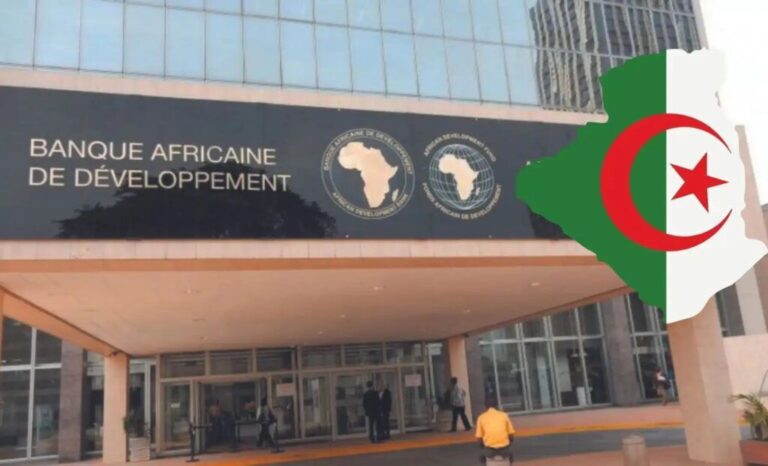
The African Development Bank (AfDB) revised its economic forecasts for Algeria upwards in its 2026 African Economic Outlook report, presented at its Annual Meetings in Brazzaville.
The pan-African institution now forecasts real GDP growth of 4.1% in 2026, compared to a previous estimate of 3.4%, before a projected increase of 4.2% in 2027.
These new projections bring the AfDB’s estimates closer to the targets set by the Algerian authorities. They come in an international environment marked by significant economic volatility, where several African economies remain exposed to commodity price fluctuations, trade tensions, and more restrictive global financial conditions.
The African Development Bank attributes this improved outlook to continued public investment, growth in non-hydrocarbon activities, and sustained domestic consumption. These factors are helping to support short-term economic activity.
However, their capacity to generate sustainable and self-sustaining growth remains a challenge regularly raised by observers of economies heavily reliant on public spending.
The report also highlights the performance of the manufacturing and agricultural sectors. While these sectors appear to be key drivers of diversification, their relative contribution to wealth creation and their ability to sustainably absorb the economy’s structural imbalances continue to fuel debate over the depth of the economic transformation underway.
On the macroeconomic front, the AfDB notes a decline in inflation to 1.7% in 2025, down from 4.4% in 2024. This trend is notably linked to the slowdown in food prices.
Economists point out, however, that inflationary trajectories remain sensitive to several external factors, notably international commodity prices and market supply conditions.
The institution also highlights progress in human development and improved access to social services. These advances help consolidate Algeria’s position among the African countries with the highest levels of development.
However, they do not fully dispel concerns regarding the creation of productive jobs, the attractiveness of private investment, and the economy’s ability to sustainably reduce its dependence on energy resources, which continue to be a key determinant of the country’s economic stability.
MK/AK/Sf/fss/as/APA