



A sting operation carried out across Africa between December 2025 and January 2026, has dealt a significant blow to transnational cybercrime networks, resulting in hundreds of arrests and the recovery of millions of dollars.
The international operation coordinated by Interpol led to the arrest of 651 suspects and the seizure of more than $4.3 million across 16 African nations as part of a broad crackdown on online scams and cross-border financial fraud.
Dubbed “Red Card 2.0,” the operation ran from December 8, 2025, to January 30, 2026, mobilising law enforcement agencies from sixteen countries to dismantle multiple criminal networks engaged in large-scale financial fraud, according to a statement issued Wednesday by the international policing body.
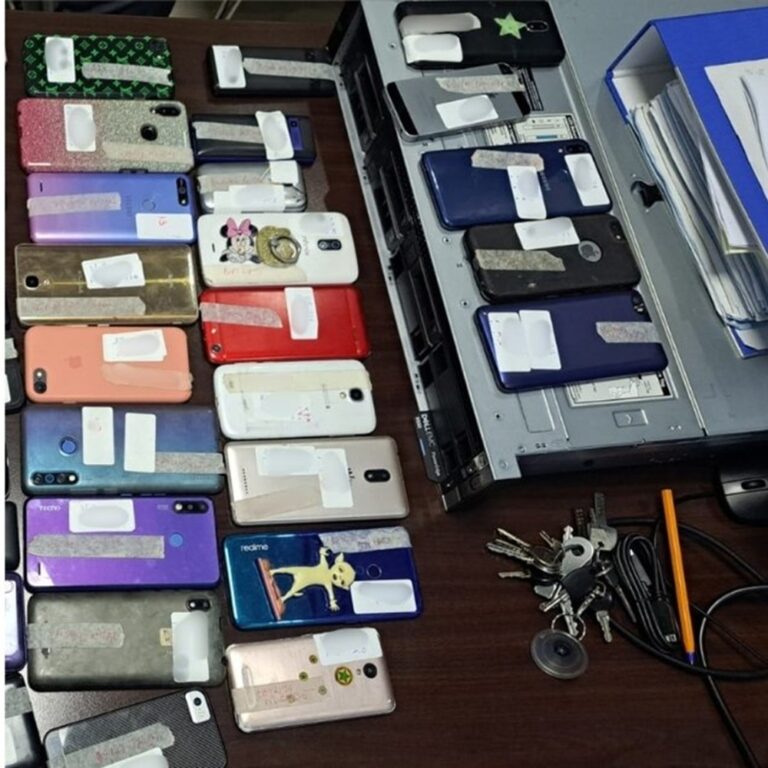
Over eight weeks of intensive investigations, authorities uncovered scams responsible for an estimated $45 million in losses, identified 1,247 victims — primarily across Africa — seized 2,341 electronic devices and neutralised 1,442 malicious IP addresses, domains and servers. The operation specifically targeted high-yield investment fraud, mobile money scams and fraudulent loan schemes.
“These organised criminal syndicates inflict devastating financial and psychological harm on individuals, businesses and entire communities,” said Neal Jetton, Director of Interpol’s Cybercrime Directorate, urging victims to report incidents to law enforcement authorities.
On the ground, Nigeria stood out with the dismantling of a network that recruited young people to carry out cyberattacks involving phishing, identity theft and fake investment platforms. More than 1,000 fraudulent social media accounts were taken down. In a separate operation, Nigerian authorities arrested six individuals who had infiltrated the internal systems of a major telecommunications operator to illegally resell airtime and data.
In Côte d’Ivoire, 58 suspects were arrested, with authorities seizing 240 mobile phones, 25 laptops and more than 300 SIM cards in cases involving mobile loan scams targeting vulnerable populations. In Kenya, 27 individuals were apprehended for fraud conducted through messaging applications and social media platforms.
The operation was conducted under the African Joint Operation against Cybercrime (AFJOC) framework and received support from the European Union and Council of Europe’s GLACY-e project, as well as private-sector cybersecurity partners.
The sixteen participating countries were Angola, Benin, Cameroon, Côte d’Ivoire, Gabon, The Gambia, Ghana, Kenya, Namibia, Nigeria, Rwanda, Senegal, Chad, Uganda, Zambia and Zimbabwe.
AC/Sf/lb/as/APA