



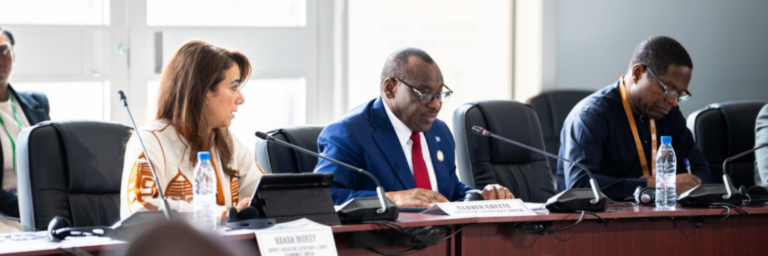
The Executive Secretary of the United Nations Economic Commission for Africa (ECA), Claver Gatete, Monday urged African countries to develop a common, equitable, and evidence-based response to the European Union’s Carbon Border Adjustment Mechanism (CBAM).
Speaking at the opening of the meeting of the African High-Level Working Group on the Global Financial Architecture, held in Brazzaville, he stressed that the CBAM goes beyond climate change
alone, becoming a major issue for trade, industrialisation, and development on the continent.
He argued that an inadequate implementation of this mechanism could exacerbate trade tensions, increase the fragmentation of the global economy, and further widen inequalities, without guaranteeing significant climate benefits.
Gatete also noted that Africa is now operating in a context marked by slower growth and increasing economic uncertainty. He noted the tightening of financing conditions, the rising cost of capital, and the reduction in concessional financing.
The UN official emphasized that the sectors targeted by the CBAM – particularly cement, iron and steel, aluminum, fertilizers, electricity, and hydrogen – occupy a strategic position in Africa’s ambitions for industrialisation, infrastructure development, energy transition, and regional integration.
Beyond carbon pricing, he highlighted the difficulties African exporters will face, especially regarding emissions measurement and verification, access to clean technologies, regulatory compliance, and securing the necessary adaptation financing.
“Without adequate support and a sufficient transition period, the CBAM risks becoming a new trade barrier rather than a genuine lever for a low-carbon transition,” he warned.
The Brazzaville meeting follows up on discussions held last month in Washington, D.C., during the Spring Meetings of the IMF and the World Bank, where African leaders called for urgent responses and lasting reforms to the international financial architecture.
During this meeting, ECA experts, including Hanan Morsy and Melaku Desta, are scheduled to present an analytical study on the impact of the European Central Bank’s (BCBAM) on African economies.
In conclusion, Claver Gatete invited participants to engage in frank, pragmatic, and constructive discussions to identify solutions that can safeguard African economies, support the continent’s
industrialisation, and promote a just energy transition.
ARD/te/fss/as/APA