





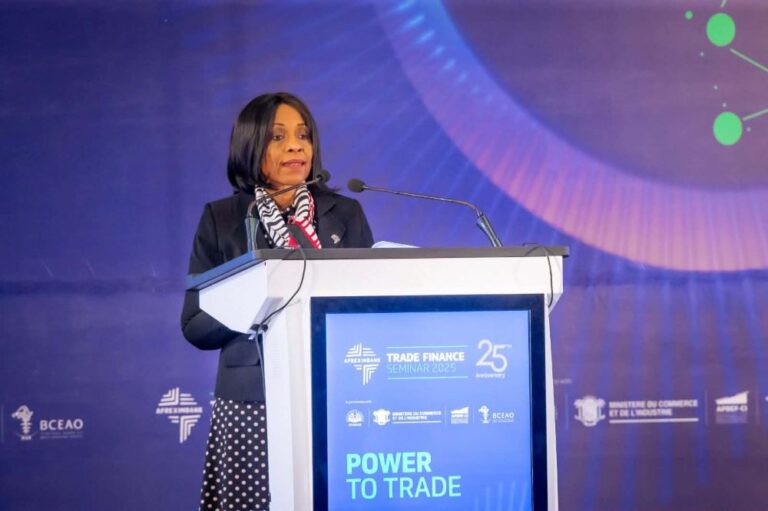
In this interview, Afreximbank, highlights the rapid growth of factoring and receivables finance across Africa while underscoring persistent structural barriers, stressing that these tools are critical to unlocking SME liquidity and advancing intra-African trade under the AfCFTA.
How do you assess the current development of factoring and receivable finance in Africa?
Africa’s factoring market reached approximately EUR 50 billion in 2024, representing about 1.3% of global volume, according to data published by FCI. This reflects strong growth from just over EUR 20 billion in 2014, translating into a compound annual growth rate (CAGR) of 8.4%, compared to 7.8% globally.
This trajectory indicates that Africa is outpacing global growth, albeit from a relatively low base. The market remains underpenetrated, but fundamentals are increasingly supportive, driven by rising demand for alternative working capital solutions.
Overall, factoring and receivables of finance in Africa are best understood as high-growth, high-impact instruments, transitioning from niche adoption to broader relevance across financial systems. This is why Afreximbank, FCI and partners are stepping up efforts to grow visibility and highlight the importance of factoring, receivable finance and credit insurance as essential catalysts for bridging the trade finance gap, among small and medium-sized enterprises (SMEs) and to accelerate intra-African trade.
What are the main barriers to the adoption of these instruments across the continent?
While the barriers are well known, they are solvable namely:
- Limited market awareness and technical capacity among SMEs, corporates and even some financial institutions.
- Legal and regulatory gaps, particularly around receivables assignment, priority rights, enforcement, and registry frameworks.
- Data scarcity, which constraints credit underwriting and increases risk aversion.
- Operational infrastructure gaps, including e-invoicing, receivables registries, digital verification tools and payment discipline.
- Foreign exchange constraints, especially for international factoring in emerging markets.
How can factoring concretely improve access to working capital for African SMEs?
Factoring enables SMEs to convert unpaid invoices into cash (immediate liquidity). This is critical in Africa, where many viable businesses are constrained not by lack of demand, but by long payment cycles and limited access to collateral-based financing.
Instead of waiting 30, 60 or 90 days for payment, SMEs can finance confirmed receivables and use that cash to buy inputs, pay staff, fulfil larger orders and grow sustainably.
This is especially important given Africa’s annual trade finance gap which is approximately US$100 billion (Afreximbank African Trade Report 2025), with SMEs accounting for 80–90% of businesses on the continent. Factoring directly addresses the challenge of cash tied up in receivables.
Which economic sectors are currently benefiting the most from these financial solutions?
The strongest use cases are in sectors with recurring invoicing, established buyer-supplier relationships and working capital pressure. These include manufacturing, agribusiness, wholesale and distribution, construction, transport and logistics, healthcare supply chains, and selected public procurement value chains. In practice, most sectors can benefit from factoring, making it highly versatile financing solution.
What role does credit insurance play in securing trade transactions in Africa?
Credit insurance is a critical risk-management tool in open-account trade. It protects sellers and financiers against the risk of non-payment by a buyer, whether due to insolvency, protracted default or, depending on the structure, political and transfer-related risks.
In markets where counterparties may lack transparency or reliable financial information, credit insurance builds the confidence. It supports trade expansion by making receivables more financeable and by enabling institutions to take measured exposure rather than avoiding the transaction altogether. That is why credit insurance and receivables finance are highly complementary.
Can it (credit insurance) help reduce risk perception in African markets?
Yes, it can. While it does not eliminate underlying commercial risk, credit insurance can significantly reduce perceived risk.
In African markets, risk perception is often broader and harsher than actual trade/transaction level performance would justify. When insurers, financiers and corporates work together, insurance helps distinguish between sound commercial risks and generalized country or industry perceptions.
This can unlock trade on an informed basis, especially for SMEs and cross-border transactions, which might otherwise struggle to secure financing.
To what extent can these mechanisms support the implementation of the AfCFTA?
Afreximbank’s role as a stalwart supporter of the African Continental Free Trade Agreement (AfCFTA) cannot be understated. And that is why the Bank believes these mechanisms are essential to AfCFTA implementation. While AfCFTA aims to accelerate intra-African trade, trade agreements alone do not move goods; financing increased working capital demand does.
Factoring, receivables finance and credit insurance provide the liquidity and risk mitigation needed for firms to trade across borders on open-account terms.
According to Afreximbank’s Africa Trade Report 2025, only 18% of African banks’ trade finance portfolios support intra-African trade, highlighting the scale of the financing gap (estimated US$100 billion) that still needs to be addressed. As Africa continues to expand regional value chains under the AfCFTA, it must also scale the financial infrastructure that supports those value chains, which factoring does.
What innovations or reforms are needed to accelerate the development of factoring in Africa?
Africa needs progress on both policy and market infrastructure.
On policy, countries need clearer legal framework for receivables finance, stronger recognition of receivables assignment, efficient collateral and notice frameworks, enforceable creditor rights, and neutral tax treatment that does not penalise factoring.
On market infrastructure, countries need to pursue more aggressively digital invoicing systems, receivables registries, payment repositories, and more specialised technical capacity within banks, insurers and regulators.
Africa does not need to invent a new model, but rather, it needs to scale proven solutions with African market realities in mind.
What are your concrete expectations from the Kampala conference?
The conference is designed as a platform for high-level dialogue on market development, legal and regulatory frameworks, credit insurance, digitalisation and the practical steps required to scale sustainable receivables finance solutions across Africa.
Our expectation is that the Kampala conference will move the conversation from awareness to implementation, fostering stronger alignment among regulators, banks, non-bank financiers, insurers, development finance institutions and market practitioners on the practical steps needed to grow factoring and receivables finance in Africa.
How can one attend the conference?
Registration for the conference is currently open. Further information on the programme and participation is available via: https://fci.nl/en/event/africa-regional-conference-factoring-receivables-finance-credit-insurance#prId=369755
ARD/as/APA