





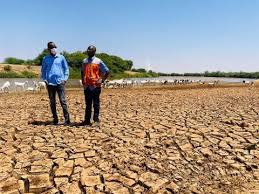
Africa is on the frontlines of the climate crisis, losing up to 9 percent of its Gross Domestic Product (GDP) annually, a UN official disclosed Thursday.
Speaking at the African ministerial conference on environment held in Nairobi, the capital of Kenya, UN Climate Change director Cecilia Kinuthia-Njenga emphasized the urgency of scaling up climate finance, to support Africa’s adaptation and resilience efforts.
Kinuthia-Njenga said Africa is worst affected by impacts of climate change while trillions of dollars are needed to meet energy, adaptation, and resilience goals,
“Africa is Kinuthia-Njenga not short of ambition or solutions… we must shift from shortfalls to delivery of finance,”
This challenge is compounded by a constrained fiscal environment where, in many countries, more is spent on debt servicing than on climate or health.
“Climate finance is not just a political choice – it is a matter of survival, of development, of dignity and of equity,” he underscored.
UNFCCC is working to strengthen institutional frameworks that can help African countries access sustainable climate finance
At last year’s COP29 Climate Change Conference in Baku, Azerbaijan, all nations reached an agreement on a new climate finance goal of $300 billion annually by 2030 to flow to developing countries, to be scaled up to USD 1.3 trillion by 2035.
“The $300 billion must be a floor, not a ceiling – and it must translate into predictable, accessible finance for those who need it most.” stressed the UN Climate Change representative.
“We are working to ensure that climate finance architecture responds to African priorities.”
MG/abj/APA