





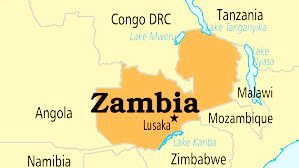
Policymakers from across Africa and the Asia-Pacific region have gathered in Zambia’s Livingstone town to launch a joint initiative aimed at strengthening social protection systems to better withstand food insecurity, economic shocks and tightening public budgets.
The three-day interregional workshop, which ends on Thursday, is co-hosted by the government of Zambia, the United Nations Department of Economic and Social Affairs, the Economic Commission for Africa (ECA), and the Economic and Social Commission for Asia and the Pacific.
It brings together representatives from six countries – Zambia, Senegal, Tanzania, Namibia, Cambodia and the Maldives – as part of a broader 2024-2027 initiative to build more inclusive and resilient social protection systems.
The gathering comes at a time when nearly two billion people globally – about 47.6 percent of the population – lack access to any form of social protection.
In Africa, coverage is even lower, with only 19 percent of the population receiving at least one benefit.
In Zambia, where about half the population lives in multidimensional poverty, the need for robust systems is particularly urgent.
“This meeting is an opportunity to reflect, to learn from each other and to forge new partnerships,” said Angela Kawandami, Permanent Secretary at Zambia’s Ministry of Community Development and Social Services.
Participants are examining ways to improve data systems, financing mechanisms and service delivery models.
A key focus is the use of digital platforms and analytics tools to enhance policy targeting and adapt programmes to real-time needs.
A notable innovation introduced at the workshop is ECA’s prototype Multidimensional Poverty Dashboard.
The platform links subnational poverty data with real-time indicators such as migration flows, population shifts and conflict data, with the aim of integrating these insights into local-level social protection programs.
“What we’re building is a tool that goes beyond poverty averages,” said Christian Oldiges, head of the Social Policy Section at ECA.
“It connects multidimensional poverty data with real-time information on crises, from migration flows to conflict and climate shocks, and links that with what’s actually happening on the ground in terms of social spending and local programmes.”
In Zambia, reforms are underway to improve registries, enhance coordination, and embed social protection in national development strategies.
Similar challenges and efforts were voiced by delegates from Namibia, Senegal and Cambodia.
The workshop is expected to feed into preparations for the Second World Summit for Social Development, scheduled for November in Doha.
That summit will advance the recently adopted Pact for the Future, which calls for stronger, rights-based and resilient social protection systems globally.
JN/APA