



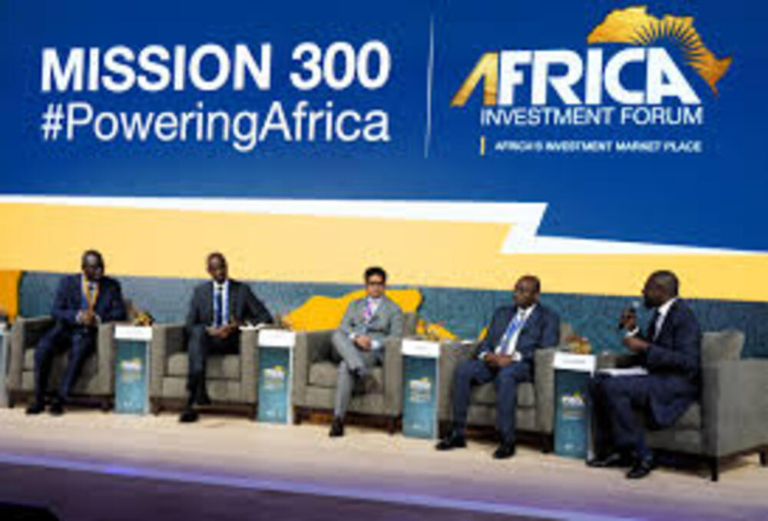
African development finance institutions are actively strengthening their coordination around Mission 300, a massive joint initiative spearheaded by the African Development Bank Group and the World Bank Group that aims to connect an additional 300 million Africans to electricity by 2030.
Meeting on the sidelines of the African Development Bank Annual Meetings in Brazzaville, several of the continent’s prominent financial leaders called for the rapid mobilization of domestic capital, noting that nearly $250 billion is currently held by development finance institutions across Africa. This strategic appeal was made during a high-level side event at the Kintélé International Conference Centre, which focused specifically on unlocking local resources to drive the ambitious energy program forward.
A major highlight of the gathering was an announcement by the West African Development Bank, with representative Oumar Tembely confirming a new commitment of approximately 1.1 billion CFA francs—roughly 1.7 million euros—to directly support the initiative. This funding arrives at a critical juncture, given that the overall financing needs for Mission 300 are estimated at $238 billion, with roughly half of that total expected to come from private sector investments. Opening the discussions, Kevin Kariuki stressed that no single institution can achieve this target alone, and he urged the creation of a dedicated coalition of African development finance institutions to improve policy coherence and maximize the impact of every investment. Such a coalition would potentially unite powerful regional entities including the Trade and Development Bank, Africa50, the African Guarantee Fund, and Cygnum Capital.
Throughout the panel discussions, participants repeatedly highlighted the importance of using blended finance mechanisms and risk-mitigation instruments to effectively draw private investors into the energy sector. Constant N’zi underscored the staggering scale of untapped domestic wealth on the continent, pointing out that there is currently $2.5 trillion sitting idle on African commercial bank balance sheets. He emphasized the urgent need to channel this vast liquidity into productive financing for infrastructure and long-term economic growth. The delegates also framed these efforts within the broader context of the New African Financial Architecture for Development, an institutional overhaul heavily promoted by the African Development Bank.
Reaffirming his organization’s long-standing dedication to the cause, Trade and Development Bank Group President Admassu Tadesse stated that his institution has supported Mission 300 from its very first day. Ultimately, the high-level talks in Brazzaville reflect a growing determination among the continent’s financial actors to take the wheel in funding Africa’s vital energy infrastructure. The participants broadly agreed that the ultimate success of Mission 300 will depend on three indispensable factors: achieving tighter institutional coordination, aggressively increasing the mobilization of local African capital, and reinforcing robust guarantee and blended finance frameworks.
TE/lb/abj/APA