



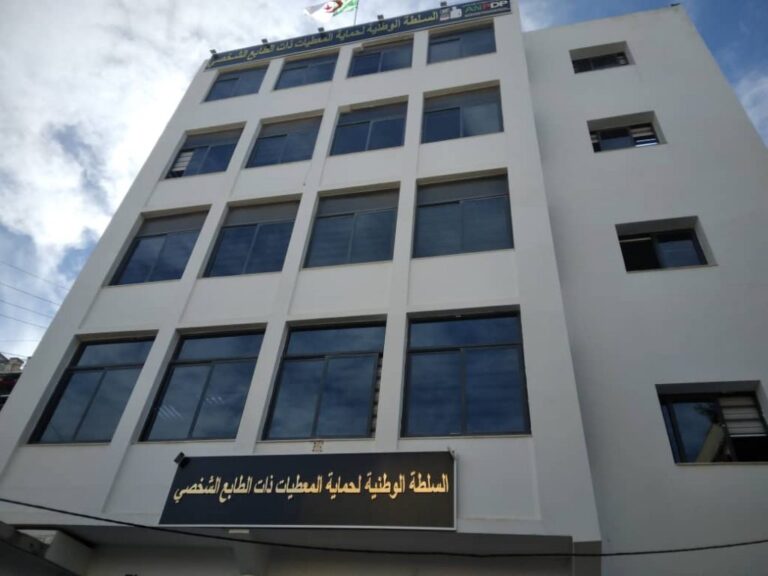
Algeria has unveiled a draft law on personal data protection, touted as a step towards aligning with European standards.
While the initiative is ostensibly aimed at facilitating future cooperation with Eurojust, its underlying motivations and true degree of independence are raising significant questions among observers.
The new Algerian draft law, presented this week as a major legal breakthrough, explicitly states its goal to “facilitate exchanges with European judicial institutions, particularly Eurojust,” according to the Ministry of Justice. This phrasing suggests an external impetus for the reform, driven more by diplomatic considerations than by internal social demand or a genuine commitment to protecting individual freedoms.
The announcement of a text guaranteeing “respect for citizens’ privacy” has been met with surprise in a country where state surveillance systems are prevalent, cybersecurity falls under military purview, and anti-terrorism laws permit communication interception with limited independent judicial oversight. Several Algerian and international non-governmental organizations, including Amnesty International, have already expressed reservations, citing a notable lack of consultation with civil society actors during the bill’s development.
The specifics of the draft law remain confidential. However, initial leaks reported by El Watan suggest that the proposed body responsible for enforcing this law would lack autonomous sanctioning powers and a truly independent status. Given that the national technological infrastructure is entirely centralized under the authority of the Ministry of the Interior, the operational scope of any “protection authority” is likely to be significantly reduced to a merely consultative role.
This reform also emerges during a period characterized by an increase in digital surveillance targeting opponents and journalists, often utilizing imported technological tools. Without further clarification and robust, open parliamentary debate, there is a considerable risk that this new law might primarily serve to legitimize bilateral agreements with European partners, while simultaneously preserving Algeria’s existing repressive digital arsenal domestically.
MK/ac/Sf/fss/abj/APA