



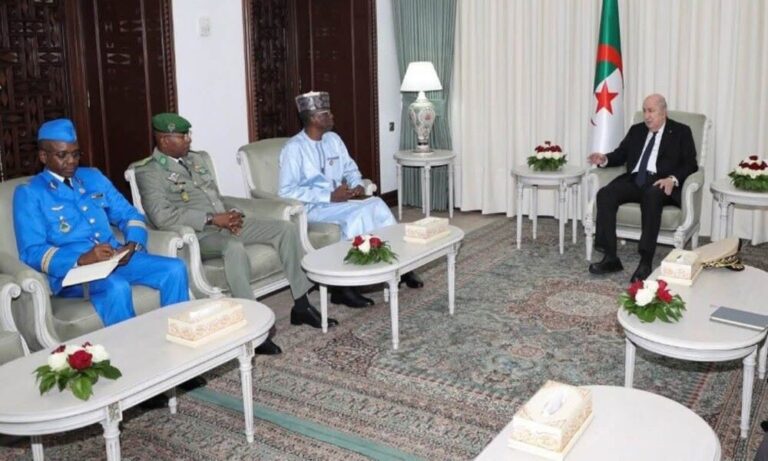
The meeting between President Abdelmadjid Tebboune and the Nigerien Defence Minister in Algiers on Tuesday, October 13, takes place against a backdrop of shifting alliances in the Sahel, marked by tensions between Algeria and several countries in the region.
While presented as a testament to the strength of bilateral ties, the meeting also highlights the limitations of a diplomatic approach that champions non-interference while simultaneously seeking to maintain strategic influence over its southern neighbours.
Algiers frequently portrays itself as a bulwark against the destabilisation of the Sahel, citing respect for sovereignty, the inviolability of borders, and the rejection of external military interventions.
In a region grappling with the spread of armed groups, cross-border trafficking, and weakening institutions, a regional power’s credibility is measured less by its pronouncements than by tangible
results.
Relations with Bamako exemplify these ambiguities. Tensions sparked by the Algerian military’s destruction of a Malian drone in April 2025 – following a border incident disputed by both sides – led to a severe deterioration in bilateral relations.
The mutual recall of ambassadors and the exchange of accusations exposed the fragility of a partnership that had long been touted as essential to regional security.
Sahel when its own disputes with a directly concerned neighbour complicate security cooperation?
The question also arises in light of shifting regional alliances.
MK/AK/Sf/fss/as/APA