



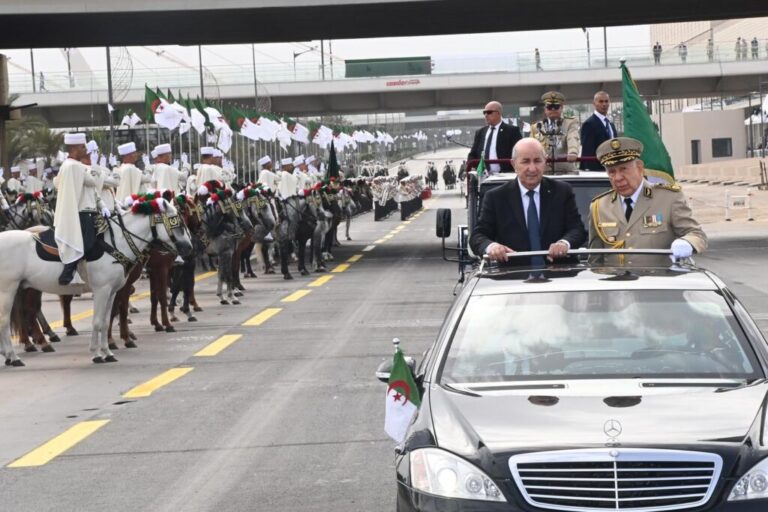
By stating that the 2026 Finance Law will not affect citizens’ purchasing power, Abdelmadjid Tebboune is seeking to display a protective stance in a fragile economic situation.
But behind the presidential announcement, Algeria’s fiscal reality reveals profound contradictions between social discourse and financial imperatives.
President Abdelmadjid Tebboune sought to reassure Algerians that their purchasing power will not be adversely affected. Chairing the Council of Ministers meeting on the 2026 Finance Law, he set a “red line”: no new taxes, no additional levies.
Citizens’ purchasing power must, he said, be “preserved.” This populist message comes at a time of serious inflation which continues to erode real household income, estimated at over 8 percent according to the latest IMF data, while the dinar maintains its slow depreciation.
Behind the presidential rhetoric, fiscal room for manoeuvre remains narrow. Algeria still depends on hydrocarbons for nearly 90 percent of its revenues, a sector vulnerable to fluctuations in the global market. The decline in gas prices since the first half of 2025 has already reduced external revenues, making the sustainability of the social transfers promised by the government uncertain.
By announcing the continuation of subsidies and macroeconomic balances, Tebboune is delaying an adjustment that has become inevitable.
The head of state calls for “a more efficient tax system” without strengthening the tax base. However, the Algerian economy remains dominated by the informal sector and struggling state-owned enterprises. Without structural reform, the fight against tax evasion risks becoming nothing more than a slogan.
Wealth creation and economic diversification, often invoked by the president, are hampered by an uncertain business climate and dissuasive administrative procedures. By also refusing to declassify agricultural land for
public projects, Tebboune seeks to position himself as a defender of food sovereignty, a mobilisation theme against the backdrop of shortages and rising food prices. But this decision, while preserving the president’s image, also reveals the absence of a truly coherent land policy that would reconcile urban, industrial, and agricultural development.
The 2026 Finance Law thus appears to be a political balancing act: preserving social peace in the short term while avoiding the painful reforms required by a constrained economy. On the eve of a politically sensitive year, Tebboune is drawing “red lines” that look more like electoral safeguards than a sustainable economic strategy.
MK/Sf/fss/as/APA