





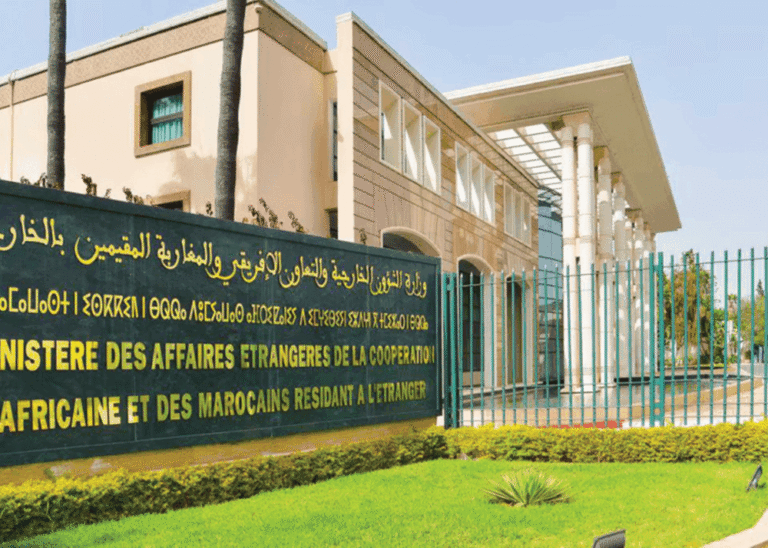
Morocco, along with over 30 other Arab and Muslim countries, has issued a joint statement condemning recent remarks by Israeli Prime Minister Benjamin Netanyahu.
Netanyahu’s public endorsement of the “Greater Israel” concept has been met with unanimous condemnation across the Arab world, with a joint statement denouncing the remarks as a direct threat to regional stability.
In an interview with i24News on August 12, Netanyahu responded “absolutely” when asked if he supported the vision of a “Greater Israel.” This statement immediately ignited outrage, with multiple Arab capitals interpreting it as confirmation of Israeli expansionist intentions. The joint statement, signed under the auspices of the Arab League, the Organization of Islamic Cooperation (OIC), and the Gulf Cooperation Council (GCC), labeled the remarks as “contrary to international law.”
Arab nations voiced their specific concerns: Egypt, which occupied the Sinai after the 1967 war, called the statements a “provocation to instability.” Jordan described it as a “dangerous provocative escalation.” Iraq warned of “the expansionist ambitions of the occupying entity.” Saudi Arabia reaffirmed its rejection of “the ideas of colonization and expansion,” reiterating its support for the establishment of an independent Palestinian state.
The joint statement also condemns Israeli Finance Minister Bezalel Smotrich’s approval of a settlement plan in the E1 area of the West Bank. This plan is seen as a territorial barrier that would prevent the viability of a future Palestinian state. The signatories reiterated their firm opposition to all annexation policies, settler violence, and Israeli incursions into the occupied territories.
The “Greater Israel” concept, which is advocated by some Israeli ultranationalist movements, is based on a biblical interpretation of borders stretching from the Nile to the Euphrates. Analysts view Netanyahu’s public endorsement of this doctrine as a radicalization of official Israeli discourse. They argue that this approach compromises any prospect of peace, risks increasing Israel’s diplomatic isolation, and fuels a permanent occupation that is perceived as illegitimate under international law.
MK/ac/fss/abj/APA