





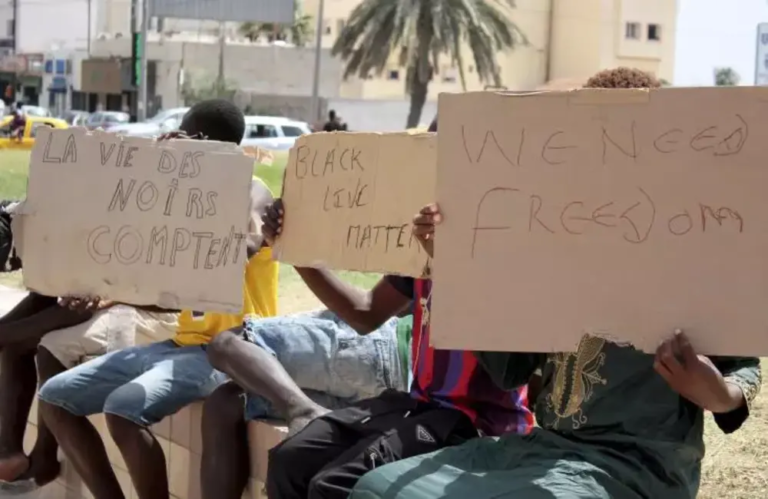
Tunisia has been shaken by widespread outrage following the circulation of a video showing the assault of a pregnant sub-Saharan migrant woman, reigniting debate over violence and hostile rhetoric targeting migrants from Sub-Saharan Africa.
Widely shared on social media since 3 June, the video reportedly shows a migrant family being attacked by several individuals inside a home located, according to local media, in the Thyna area near Sfax. The footage shows a pregnant woman being assaulted and threatened in the presence of her husband.
In response to the strong public reaction, Tunisia’s Ministry of Interior announced on 5 June the arrest of those involved. In a statement, authorities said the investigation was launched proactively, without any prior complaint being filed.
The ministry added that investigations established the incident occurred around five years ago, and that the video had recently been recirculated from multiple countries, contributing to its wide dissemination across digital platforms.
The case has reignited long-standing concerns raised by human rights organisations and civil society actors regarding the situation of Sub-Saharan migrants in Tunisia. While many social media users condemned the violence shown in the video, several posts containing discriminatory or hostile content against migrants were also reported online.
The controversy comes amid recurring tensions over migration issues. In February 2023, remarks by President Kais Saied on irregular migration sparked strong reactions domestically and internationally, with several organisations warning of a rise in discriminatory acts against Sub-Saharan nationals.
The debate was further revived in April 2026 following controversial comments by MP Tarak Mahdi during a parliamentary session on migration issues. His remarks were widely condemned by associations, political figures, and human rights organizations.
In a joint statement reported by RFI, several Tunisian organisations strongly condemned the violence shown in the video and called for thorough investigations. They also demanded sanctions against the perpetrators, as well as stronger measures to combat racism, xenophobia, and hate speech.
According to the European Institute of the Mediterranean, which relies on NGO data, Tunisia hosts an estimated 20,000 to 25,000 migrants from sub-Saharan Africa.
MK/te/Sf/lb/as/APA