





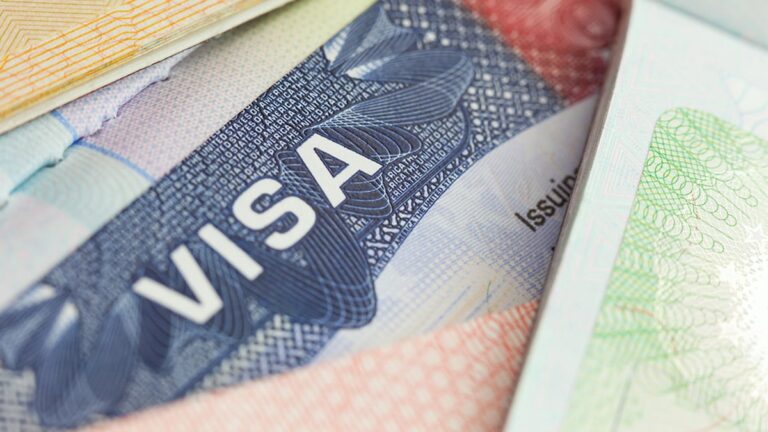
Nigerians spent over N50bn on United States visa applications between 2023 and 2024, despite a sharp decline in approvals as Washington tightened immigration controls and increased scrutiny of applicants.
An analysis of the Intelpoint report, using data from the US Department of State, shows that 201,200 non-immigrant visas were issued to Nigerians between 2023 and 2024. At a standard application fee of $185 per applicant, Nigerians spent approximately $37.2m, equivalent to N50.7bn at an average exchange rate of N1,360 to the dollar.
It noted that the visa issuances declined by about 23 per cent, falling to 87,300 in 2024 from 113,900 in 2023, a reduction of 26,600 visas.
Business and tourism travel dominated approvals in 2024, with B1/B2 visas accounting for 83 per cent of total issuances, while students visas (F1) represented about 7 per cent. Exchange visitor visas (J1) and other temporary categories made up the remainder.
According to the report by Punch newspaper on Tuesday, Nigeria remained a significant source market for the United States, accounting for about 0.8 per cent of global non-immigrant visa issuances in 2024, the data showed.
Former President of the National Association of Nigeria Travel Agencies, Susan Akporiaye, said that Nigerians’ travel behaviour is driven by more than economic conditions, noting a strong cultural inclination toward mobility.
“People would say it’s because of the economy, but I share a different view. Nigerians are generally migrants; they love travelling.
We are like the Chinese of Africa,” Akporiaye said.
The executive argued that most Nigerians who travel abroad return home, and only a small proportion remain outside the country permanently. “There is so much noise of Nigerians staying back. The ones who travel and return are far more than those who stay back. It’s not up to 10 per cent that don’t return,” she added.
The decline in visa issuances comes amid a series of policy changes introduced after Donald Trump returned to the White House in January 2025, which have gradually tightened requirements for Nigerian applicants.
In July 2025, the US Department of State announced that most non-immigrant and non-diplomatic visas issued to Nigerian citizens would be restricted to single-entry permits valid for three months, with existing visas unaffected.
In August, applicants were required to disclose all social media usernames used over the previous five years on DS-160 forms, with officials warning that omissions could lead to visa denial or ineligibility.
Akporiaye also noted that travel demand cuts across income levels, from affluent individuals to ordinary citizens travelling for social events. “Nigerians like to explore. We travel for birthdays, weddings, and other ceremonies. I’m not talking about people like Dangote or Otedola, but ordinary Nigerians you don’t even know,” she said.
The expert, however, acknowledged that demand for US travel has softened relative to other destinations, citing operational and policy-related constraints.
“The demand has reduced for some destinations like the US, and it’s becoming worse now. Conditional requirements and operational changes at the US Embassy in Abuja have made access more difficult, including the consolidation of services in Lagos,” she added.
GIK/APA