





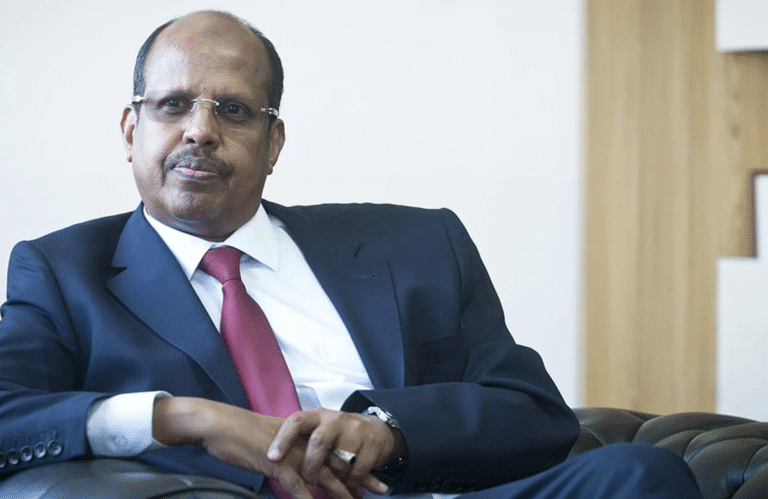
The Chairperson of the African Union (AU) Commission Mahmoud Ali Youssouf says it was high time member states of the continental organisation moved from reflection to action and break the cycle of conflicts which undermine security in Africa.
He said while gains have been registered over the past 60 years, instability in some member states has permenently proved a bane to progressive transformations which could have changed the lives of Africans in unprecedented way.
During his keynote address at the 11th Tana High-Level Forum on African Security in Addis Ababa, the capital of Ethiopia, on Saturday, the chairperson said the unity and solidarity among African nations are essential to safeguard the continent against potential vulnerabilities.
The AUC chairperson observed that what is needed in Africa is unity and solidarity as its foundation to face the implications of a shifting world order marked by fragility and uncertainty.
“Our biggest challenge is translating ideas into actions that improve lives” he said.
Youssouf called on the continent’s leadership to work closely with the African Union to build the Africa envisaged by all its citizens.
“Reflections that are not grounded in action remain volatile,” he warned, stressing that the biggest challenge facing Africa is leaping from theoretical discourses to consistent actions that positively affect citizens’ lives.
He underscored the significance of Agenda 2063, which outlines the vision for the Africa its continental citizens have been aspiring for in course of a decade.
Despite the frequency of forums of the kind he was attending, the “mirror of reality” reflects a concerning image of the progress, Youssouf said.
Citing the inability in achieving the goal of silencing the guns by 2020, a promise made during the 50th anniversary of the Organization of African Unity in 2013, he stated that a new target for peace is set for 2030, just five years away.
This is just five years away and given the security situation in member states Youssouf does not see grounds to dispel his skepticism about the ability to resolve conflicts and crises by the set timeframe.
While acknowledging positive developments such as the African Continental Free Trade Area (AfCFTA) and the Africa CDC, he lamented that further achievements could have been realised if conflicts were resolved more effectively and ensure they do not flare up again once their embers have been extinghished.
He asserted that effective joint action must be rooted in an unyielding commitment among African nations to resolving wars in Africa which have only guaranteed death, destruction, misery and a near permanent disruption to economic and social development.
As he spoke conflicts continue to rage in Sudan, Burkina Faso, the Democratic Republic of Congo, Somalia, Ethiopia, Nigeria and Mozambique with devastating humanitarian consequences.
MG/as/APA