





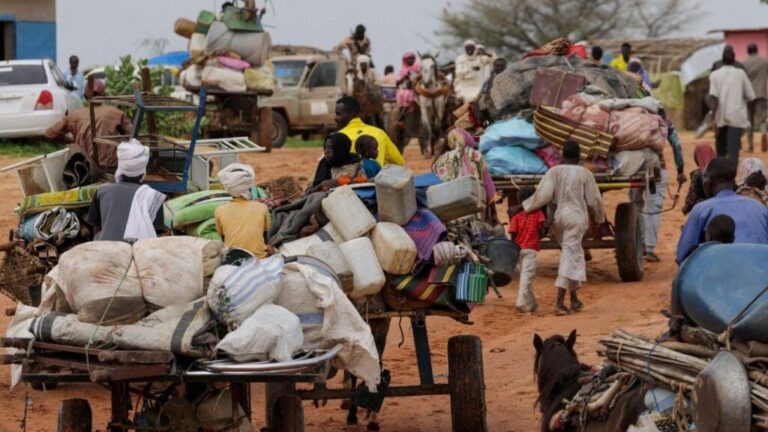
The United Nations High Commissioner for Refugees (UNHCR), the European Union (EU) and the Chadian authorities have launched the Alternative to Camps and Agricultural Resilience Project in Southern Chad (PACRAS), designed to promote the economic self-reliance and sustainable integration of refugees in the Logone Oriental province, in the south of the country.
Funded by the European Union to the tune of 2 billion CFA francs, the project aims to support approximately 4,000 Central African refugees living in camps toward voluntary resettlement in five villages in the canton of Donia.
PACRAS seeks to gradually reduce dependence on humanitarian aid by developing income-generating activities, particularly in agriculture, processing and marketing of agricultural products.
The project also intends to strengthen the economic inclusion of refugees and their integration into host communities.
Beyond agricultural activities, the programme includes investments in basic social services, such as health, education and access to water and sanitation to improve the living conditions of refugees and local populations.
The environmental component also includes the planting of 5,000 trees and the distribution of 1,000 improved cook stoves, designed to reduce fuel wood consumption and pressure on natural resources.
The project launch comes as nearly 145,000 Central African refugees live in southern Chad, some having been in the country for almost two decades due to successive crises in the Central African Republic.
For UNHCR and its partners, PACRAS represents a step towards an approach that prioritizes sustainable solutions, resilience and economic empowerment, while strengthening cohesion between refugees and host communities.
The project is part of broader efforts undertaken by Chad and its partners to respond to the growing pressure of forced displacement and to promote a shift from humanitarian assistance to solutions more focused on local development.
TE/Sf/fss/gik/APA