



The 14th session of the Tripartite Commission involving Mali, Burkina Faso, and the United Nations High Commissioner for Refugees (UNHCR) opened on April 13, 2026, in Bamako.
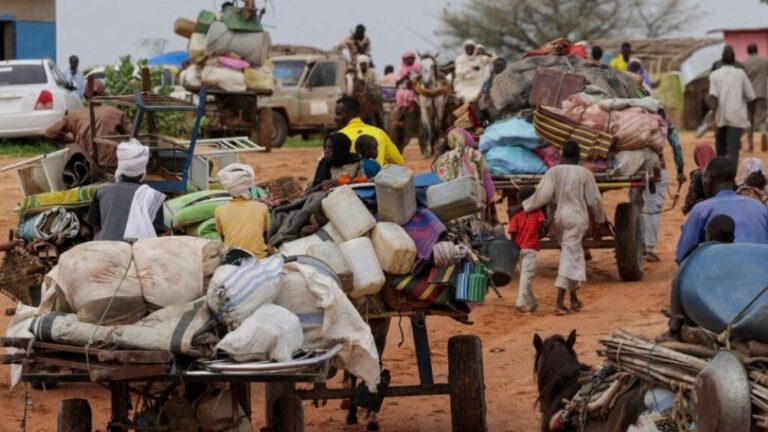
The summit aims to evaluate conditions for the voluntary and safe repatriation of refugees, as forced displacement remains a defining feature of the ongoing Sahelian crisis.
The high-level talks, held at the Hotel Salam, come two years after the 13th session in Ouagadougou, which resulted in a revised agreement between the stakeholders.
While in Bamako, delegations are expected to rule on a joint action plan, protection guarantees for returnees, and the practical requirements for sustainable reintegration in regions still grappling with instability.
According to the latest figures from the UNHCR’s operational portal, as of February 28, 2026, Mali hosted 180,619 registered refugees, 97,020 pre-registered individuals, 13,645 unregistered persons and 315 asylum seekers.
This brings the total to over 291,000 displaced persons. Among the registered population, 126,363 originated from Burkina Faso and 37,256 from Niger. The regions of Mopti, Gao, and Ménaka remain the primary host hubs for these populations.
The exodus of Malian nationals also remains massive. In Mauritania, the UNHCR recorded over 160,000 Malian refugees and asylum seekers in 2026.
Meanwhile, Burkina Faso continued to host 41,765 refugees—primarily Malians—as of mid-2025.
These figures underscore a regional crisis that extends far beyond the bilateral framework between Bamako and Ouagadougou.
The Bamako meeting is taking place in a country that still counts 414,524 internally displaced persons (IDPs), per the latest official data cited by the UNHCR.
For the three parties involved, the stakes are not merely humanitarian.
The central challenge is determining whether security conditions, access to basic services, and reintegration frameworks are sufficiently robust to transform the principle of voluntary return into a viable, large-scale reality.
MD/te/Sf/lb/as/APA