



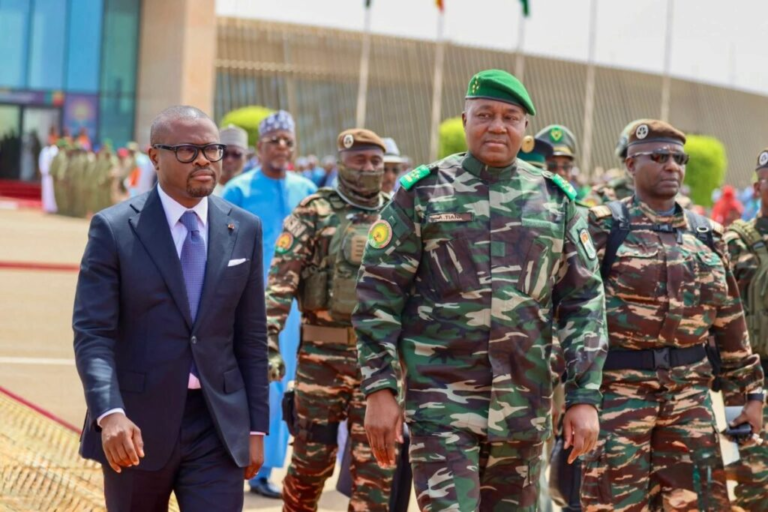
Benin and Niger formalized the conclusions of an initial round of technical talks on June 16, 2026, issuing a joint communique that consolidates progress made during President Romuald Wadagni’s recent visit to Niamey.
The document firmly reaffirms both nations’ commitment to moving forward with the reopening of their shared border and reviving bilateral cooperation. The signing of this joint communique marks the first phase of a bilateral reconciliation process, an initiative launched following Beninese President Romuald Wadagni’s official visit to Niamey on June 2, 2026, with the primary goal of reopening the shared border, which has been closed since the July 2023 political crisis.
Just nine days after his inauguration, President Wadagni traveled to meet with Nigerien Head of State Abdourahamane Tiani. Held in an atmosphere described as “highly cordial,” the talks between the two leaders led to a nine-point joint agreement noting their shared determination to boost bilateral cooperation and establishing a joint committee of experts tasked with examining the conditions required to normalize relations along the Benin-Niger border. According to the June 16 communique, both parties welcomed the fruitful results achieved at the conclusion of the two-week technical talks. The Beninese and Nigerien delegations stated they have already submitted their findings—covering all issues within the committee’s mandate—to their respective governments.
The document notes that experts from both countries will reconvene by the end of the week to consolidate their conclusions before submitting a joint report to both heads of state, an upcoming step that is being framed as a decisive milestone in the ongoing diplomatic process. At the core of the June 2 discussions was a mutual desire to remove all barriers to cooperation, specifically the reopening of the Benin-Niger border, and the June 16 communique reaffirms this objective alongside the announced revival of the Niger-Benin Joint Cooperation Commission.
On the security front, both governments reiterated their commitment to joining forces to combat the scourge of terrorism and banditry in the subregion. This aligns closely with the Beninese president’s inaugural address, in which he emphasized that West African nations are bound to work together in the face of shared security threats. The communique also stresses a shared intent to enhance security coordination and lock in the gains of the ongoing dialogue amid a gradual normalization of bilateral ties. Finally, the June 2 visit to Niamey was part of a broader regional diplomatic tour by the Beninese head of state, who also traveled to Ouagadougou on the same day, signaling a highly active diplomatic opening to his presidency. Furthermore, both parties have agreed in principle to a reciprocal visit by General Tiani to Benin, with specific details to be finalized through diplomatic channels.
AC/Sf/lb/abj/APA