





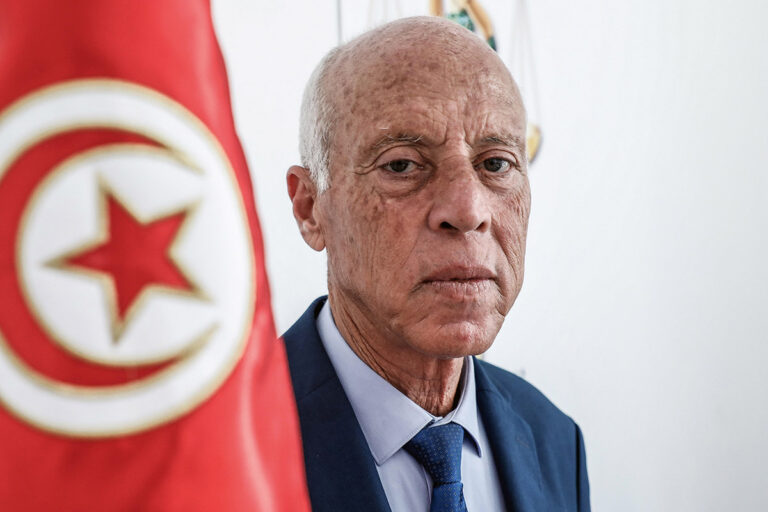
Tunisian President Kais Saied has denounced a resolution adopted by the European Parliament demanding the rights of citizens are respect, calling it a “blatant interference” in his country’s internal affairs.
The resolution was passed by the European Union Parliament on Thursday, November 27 calling for the “release” of all individuals detained in Tunisia for exercising their freedom of expression.
During a meeting with Minister of Foreign Affairs, Mohamed Ali Nafti, Saied instructed him to lodge a protest with European officials, stating that they “can learn lessons from us in the field of rights and freedoms,” according to a statement released by the Tunisian Presidency.
The Tunisian leader noted that he had already summoned the EU ambassador to Tunis, Giuseppe Perrone, on Tuesday for “non-compliance with the rules of diplomatic work.”
This move followed a meeting between the diplomat and the head of the powerful UGTT trade union, a co-recipient of the 2015 Nobel Peace Prize for its role in Tunisia’s post-2011 democratic transition.
The European Parliament’s resolution, voted on Thursday, calls for the release of “all persons detained for exercising their right to freedom of expression, including political prisoners and human rights defenders,” the EP website stated.
European lawmakers also urged Tunisia “to safeguard and protect the freedom of assembly and expression as well as the independence of the judiciary,” the text added.
The condemnation comes as an appeals court on Friday sentenced approximately forty opposition figures—most of whom have been imprisoned since the spring of 2023—to prison terms of up to 45 years. Some defendants saw their initial sentences increased, while others received reduced sentences.
In its resolution, the European Parliament specifically named Sonia Dahmani, a well-known lawyer and columnist, demanding her “immediate and unconditional” release.
The lawyer was released from prison on Thursday afternoon, after the resolution was passed, following 18 months of detention.
She benefited from a conditional release but remains under prosecution in several cases under a controversial decree on false information, which has drawn widespread criticism from rights advocates.
In a video released by the Tunisian Presidency, Mr. Saied also asked his top diplomat to “strongly protest to a representative of a foreign country accredited in Tunisia,” whom he accused of interference.
The Ministry of Foreign Affairs subsequently announced it had summoned Dutch ambassador Josephine Frantzen to protest a breach of “diplomatic protocol,” urging her “not to interfere in Tunisia’s internal affairs,” without providing specific details regarding the alleged actions.
AK/sf/lb/as/APA