





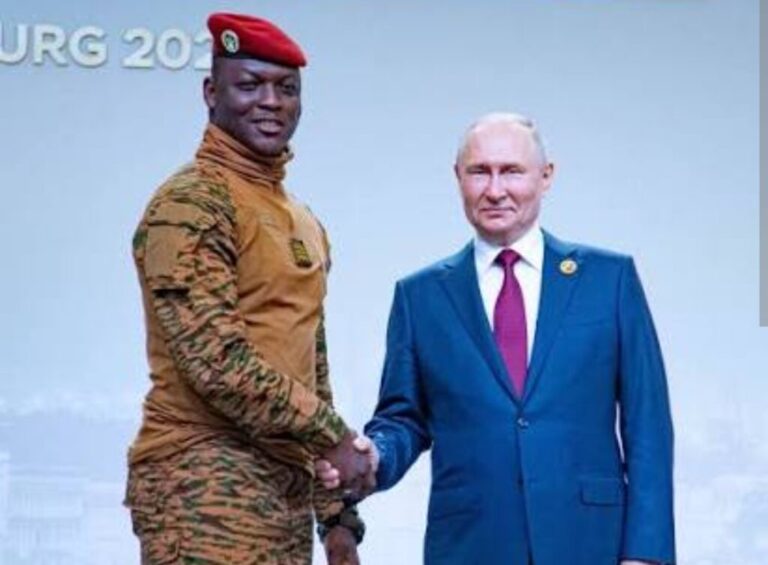
Burkina Faso and Russia took a significant step on Thursday in formalising their diplomatic rapprochement, as the two countries’ foreign ministers signed a new cooperation framework in Moscow.
They signed the ”Agreement on the Foundations of Relations” aimed at providing a concrete and structured boost to what both sides describe as a strategic partnership.
Under the impetus of Presidents Ibrahim Traoré and Vladimir Putin, Ouagadougou and Moscow are strengthening their legal framework for cooperation. The agreement, signed during the Burkinabe foreign minister’s working visit to Russia, replaces the previous framework governing relations between the two states.
Burkina Faso’s foreign minister described the move as “historic,” stressing that the document goes beyond administrative formalities and reflects a strategic vision. “Every word has been carefully chosen, every paragraph thoughtfully crafted to produce this consensual document, which opens the prospect for both countries to enter a new phase with concrete projects,” he said, noting that the text now clearly defines priority sectors and a shared working approach.
Russian foreign minister Sergey Lavrov welcomed what he called the consolidation of a “solid, pragmatic and exemplary” cooperation. He reiterated Moscow’s support in the security domain, emphasising that “the fight against terrorism in the Sahel remains a priority for Moscow,” and confirmed the continuation of technical assistance to Burkina Faso’s defence and security forces.
Beyond security cooperation and alignment within international forums such as the United Nations, the two delegations also addressed what they described as a shared concern: information warfare. In response to what they termed “disinformation campaigns” targeting Burkina Faso and other member states of the Alliance of Sahel States (AES), both ministers advocated closer collaboration between Russian and Burkinabe media outlets to enhance counter-narratives.
The signing marks the culmination of a high-level mission that included representatives of the Presidency of Faso and diplomatic experts. According to sources familiar with the matter, additional legal instruments are expected to follow in order to further expand and formalise this growing bilateral cooperation.
Ho/Sf/lb/as/APA