





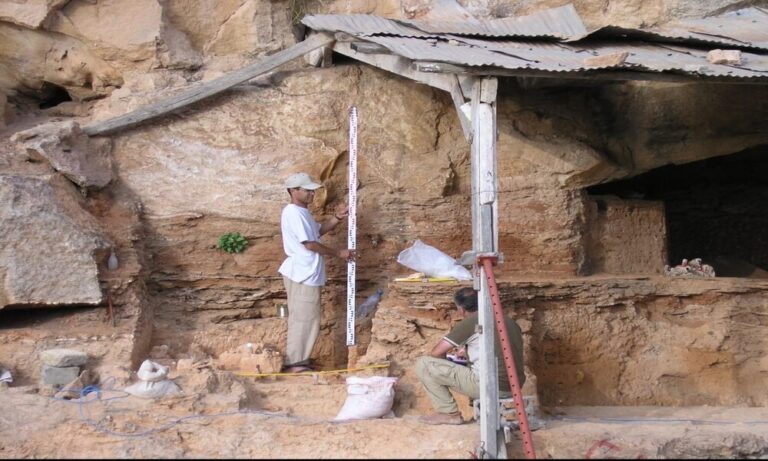
In a landmark discovery published in the journal Nature on January 7, 2026, international researchers have unveiled human fossils from Casablanca that provide a “missing link” in our species’ history.
Unearthed from the Grotte à Hominidés at the Thomas I quarry, the remains—which include mandibles from two adults and a child—date back approximately 773,000 years. This timeframe is critical as it marks the exact period when genetic evidence suggests modern humans began to diverge from the lineages that led to Neanderthals and Denisovans.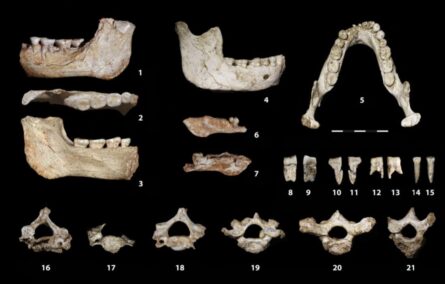
The discovery is the result of decades of systematic excavation under the Franco-Moroccan “Prehistory of Casablanca” program. Scientists from Morocco’s National Institute of Archaeological Sciences and Heritage (INSAP) and various global partners found that these ancestors possessed a unique anatomical signature. Their physical traits combine the archaic, robust features of Homo erectus with more “derived” or modern characteristics. This blend suggests that these populations were at the very root of the African lineage that eventually produced Homo sapiens.
A major breakthrough of this study lies in the precision of its dating. Using high-resolution magnetostratigraphic analysis, the team identified the Matuyama-Brunhes magnetic reversal within the cave’s sediment layers. This geological event, where the Earth’s magnetic poles flipped, is known to have occurred 773,000 years ago. Having such a robust “chronological anchor” makes these fossils some of the most securely dated human remains ever found in Africa, filling a significant gap in the fossil record of the Early Pleistocene.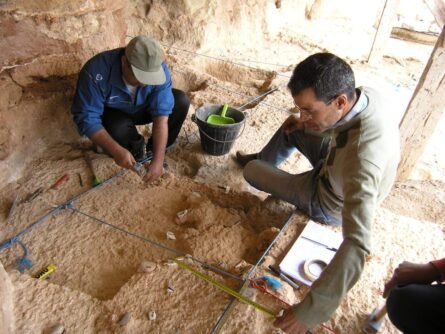
Moroccan authorities have hailed the find as a testament to the continent’s deep evolutionary heritage. By placing these early humans in North Africa at such a pivotal moment, the research reinforces the “African origin” theory of humankind. It suggests that while Homo antecessor was emerging in Europe, a distinct but related population in the Maghreb was laying the foundation for the eventual rise of modern humans. This discovery solidifies Morocco’s status as a global epicenter for understanding the dawn of humanity.
MK/ak/ac/fss/abj/APA