





The Moroccan Sahara Autonomy Plan continues to gain significant international traction, with the Parliament of the Central African Economic and Monetary Community (CEMAC) now throwing its full support behind the initiative.
During the closing of its second ordinary session in Malabo, Equatorial Guinea, the CEMAC Parliament issued a Joint Declaration asserting that the autonomy initiative, proposed for Morocco’s southern provinces, is the “most credible, realistic, and pragmatic” basis for achieving a lasting political solution to the regional dispute over the Moroccan Sahara.
The Declaration, signed by the President of the Moroccan House of Councilors, Mohamed Ould Errachid, and the President of the CEMAC Parliament, Evariste Ngamana, specifically expressed support for the sovereignty and territorial integrity of the Kingdom of Morocco and CEMAC member countries.
The Malabo Declaration states that this position reflects the deep bonds of brotherhood, friendship, and unity between Morocco and the Community. It also reaffirms a shared desire to support these relations at the parliamentary level, building on a prior memorandum of cooperation signed in Rabat.
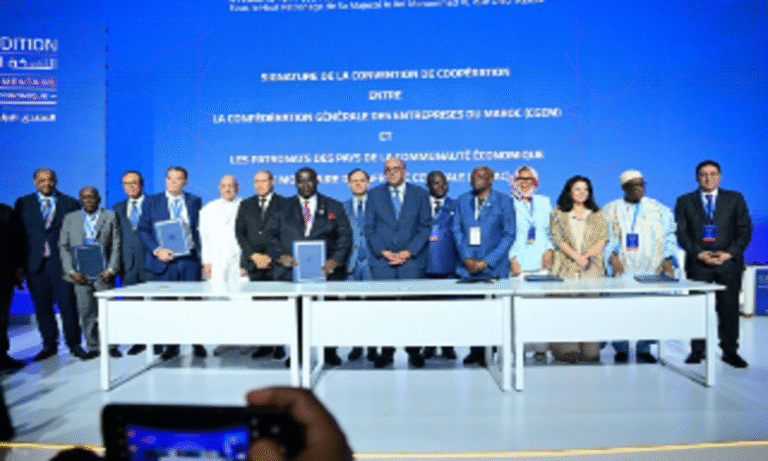
This collaboration has since been consolidated by the creation of a Parliamentary Economic Forum, which serves as a regular institutional framework uniting political leaders, legislators, and economic operators from both Morocco and CEMAC countries.
This new backing from CEMAC adds to the support expressed by numerous countries before the 4th Committee of the UN General Assembly in New York. The trend signals a broader international consensus recognizing the Moroccan autonomy plan as the only viable path to a lasting settlement.
Major global players, including the United States of America, Spain, France, and the United Kingdom, already support this approach. Even non-Western powers have shown favor:
China, by voting for Resolution 2602 in 2021, confirmed its preference for a “realistic and pragmatic solution based on compromise.” Russia, through Foreign Minister Sergei Lavrov, stated its readiness to “welcome” the plan, describing it as “one of the forms of self-determination recognized by the United Nations.”
Minister Lavrov is scheduled to receive his Moroccan counterpart, Nasser Bourita, this Thursday in Moscow. Russia recently affirmed that it considers Morocco “an important partner” on the African continent, with the talks expected to examine promising avenues for strengthening traditionally friendly Russian-Moroccan relations.
AK/Sf/fss/abj/APA