





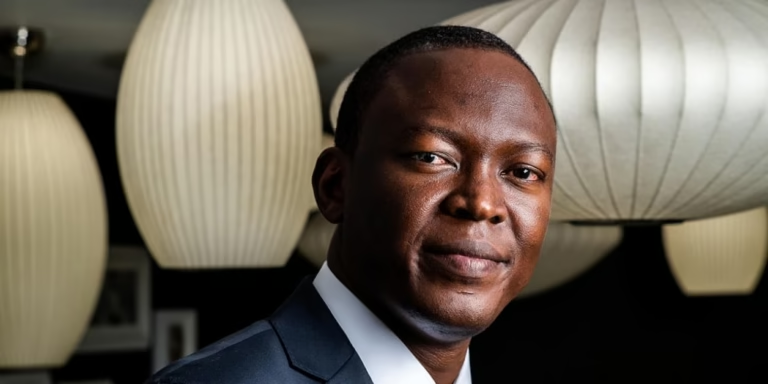
Chadian opposition figure Succes Masra appears in court on Wednesday in Ndjamena on charges related to the Mandakao violence. The trial is highly politically charged and has sparked concern and criticism.
Masra, a former transitional Prime Minister and leading opposition appeared before the criminal division of the
N’Djamena Court of Appeal, facing serious charges, including disseminating racist and xenophobic messages via a computer, criminal conspiracy, murder, and complicity.
His court appearance marks a turning point in a legal case that his supporters have described as politically motivated. It follows a decision handed down on July 30 by the N’Djamena Indictment Division, which referred the opposition leader to the criminal division.
His lawyer, Saïd Larifou, a member of the Moroni Bar (Comoros), immediately challenged this decision, denouncing a procedure “devoid of material evidence or credible testimony” and based on “no serious legal basis.”
In a press release, Larifou accused the judicial authorities of acting under political pressure and described the prosecution as “purely arbitrary.” He urged national courts to guarantee the rights of the defense, while calling for vigilance from the international community, particularly Chad’s partners and human rights organisations.
The legal case takes place in a tense political climate. Succes Masra, who returned to the opposition after leaving his post as transitional Prime Minister, is calling for democratic reforms.
Many observers fear that this procedure will exacerbate tensions between the government and the opposition.
His arrest was announced shortly after violent intercommunal clashes on May 14, 2025, in the village of
Mandakao, in Logone Occidental, which officially left 76 dead. The public prosecutor declared at the time that Masra was charged with incitement to hatred, revolt, formation and complicity of armed gangs, complicity in murder, arson, and desecration of graves.
As his trial began on Wednesday, the Supreme Court of Ndjamena had been under tight security.
Journalists are systematically kept away from the trial, reinforcing the opacity of a case that fuels debate and divides civil society. Several voices are calling for his release to preserve social peace and cohesion.
CA/ac/fss/as/APA