



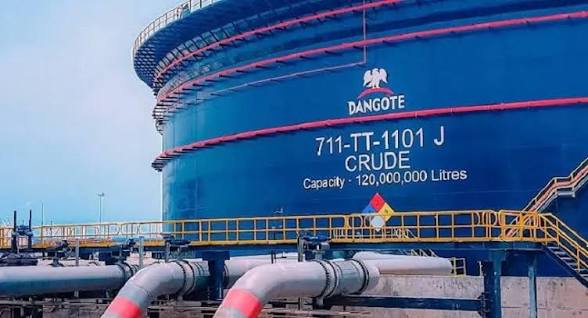
Dangote Group said a Kenyan court ruling over a land rights dispute will not halt the groundbreaking of the proposed Lamu oil refinery project with intended capacity of producing about 700,000-barrel-per-day.
The group’s remark came on Tuesday after the Malindi Environment and Land Court ordered that the “status quo prevailing” on the disputed land be maintained until a hearing scheduled for October 14.
The case was filed by 133 residents of Chandavai in Lamu County, who claim the land earmarked for the refinery is part of their ancestral heritage and has been occupied and farmed by their families for generations.
Lawyer Hesbon Omollo said his interpretation of the order was that it did not necessarily prevent the planned ceremony, although the parties would still have to return to court to argue their respective positions.
The residents said they have occupied and cultivated the land for years but were excluded from the acquisition, compensation and resettlement process.
Although they do not hold title deeds to the disputed parcel, they are seeking recognition of their claims based on their longstanding occupation and use of the land.
The applicants had asked the court to stop the planned groundbreaking ceremony and other activities associated with the commencement of the refinery project.
They also sought orders stopping further clearing, excavation, fencing and construction on the disputed land.
In the meantime, the parties have been directed to maintain the status quo on the disputed property.
The court dispute has created uncertainty over activities at the site, but a distinction has emerged between holding the official ceremony and carrying out construction activities on the contested land.
The company said the ruling would not prevent the official launch but could affect some ongoing or future activities connected to the site.
President William Ruto is expected to lead the groundbreaking ceremony for the proposed refinery on Wednesday. The facility, backed by Nigerian billionaire Aliko Dangote’s Dangote Group, is designed to have a processing capacity of 700,000 barrels of crude oil per day.
MG/abj/APA