



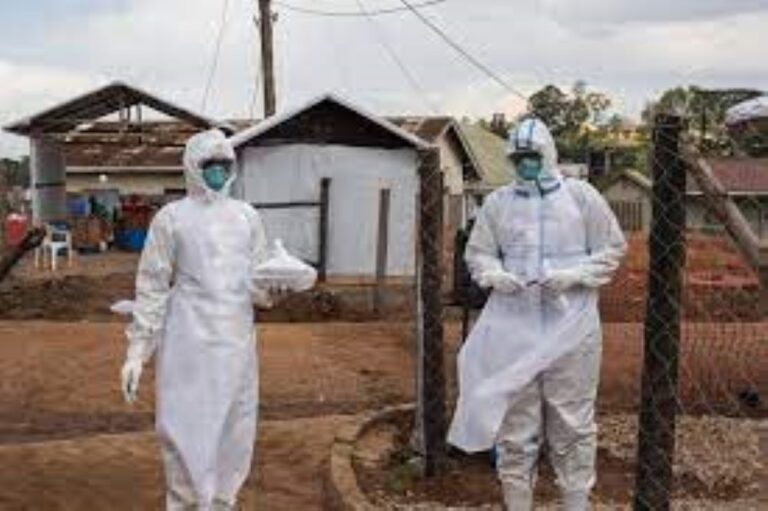
The Democratic Republic of the Congo (DRC) continues to face the persistent spread of an Ebola epidemic, six months after it was officially declared.
With more than 11,200 confirmed cases and 5,500 reported deaths, the outbreak – linked to
the Bundibugyo strain – has now spread to eight provinces, while insecurity, public distrust, and challenges in contact tracing are hindering health operations.
Declared on May 15 in Ituri Province, the epidemic now affects 67 health zones. According to data reported by Radio France Internationale (RFI), it is the deadliest outbreak ever recorded in the country.
Originating in Mongwalu, a mining town located about 50 kilometres north of Bunia, the virus has gradually spread to other territories.
Nearly 90% of cases remain concentrated in the provinces of Ituri and North Kivu, where the virus is still active across approximately 50 health zones.
The African Union’s health agency, Africa CDC, has noted new resurgences in Fataki, Kilo, Drodro, and Mahagi (Ituri), as well as in Beni, Butembo, and Oicha (North Kivu).
On the ground, the response effort faces ongoing obstacles, particularly regarding the identification and monitoring of individuals who have been in contact with those infected.
Furthermore, community distrust toward health teams complicates surveillance and patient care operations.
According to Africa CDC, 64% of deaths occur within the community – a statistic that highlights the difficulties patients face in accessing healthcare facilities, as well as the limitations of early detection systems.
Added to these obstacles is the deteriorating security situation in the east of the country.
Around 60 incidents targeting medical personnel and healthcare facilities have been recorded over the past six months.
Violence by armed groups has also triggered population displacement, complicating epidemiological monitoring and the work of response teams.
This situation stands in contrast to developments in Uganda – which has also been affected by this outbreak of the Bundibugyo strain – where, according to available information, no new cases have been reported since July.
In the DRC, the persistence of transmission highlights the challenges of containing the epidemic in an environment marked by armed conflict and population displacement. Consequently, contact tracing, community engagement, and ensuring the safety of health interventions remain critical to curbing the spread of the virus.
DM/te/Sf/fss/as/APA