





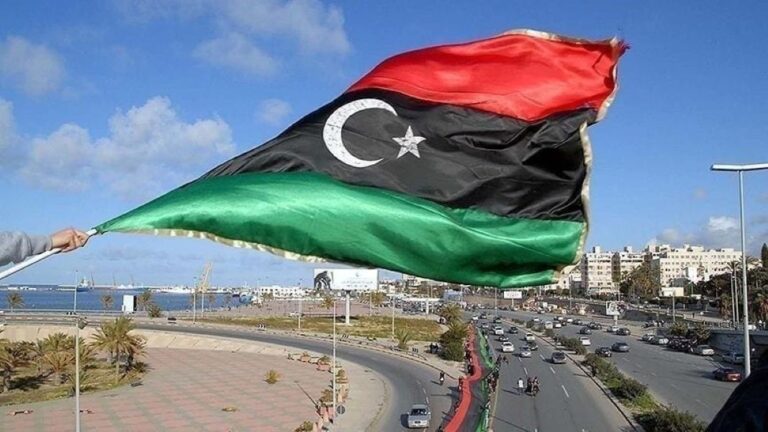
The authorities in eastern Libya are calling for presidential elections to be held “as soon as possible,” stressing the need to restore political legitimacy through the ballot box and bring an end to the prolonged transition period.
Parliament Speaker Aguila Saleh Friday urged the High National Elections Commission to immediately begin implementing the presidential election law issued by the legislative authority and to take the necessary steps to set a date for the presidential vote without delay, according to local media reports.
Saleh said fast-tracking the electoral process is a crucial step toward building a stable state.
He added that the turnout of thousands of citizens in several regions of Libya reflects the desire of nearly three million registered voters to move toward elections without further postponement, stressing that the will of the Libyan people must be the source of authority.
On Friday, the cities of Benghazi, al-Bayda and Tobruk in the east, as well as Sebha, Obari and al-Jufra in the south, and Bani Walid in the west, witnessed demonstrations where participants demanded the swift organisation of presidential and parliamentary elections and insisted on their right to elect a president through the ballot box.
Reacting to the demonstrations, Osama Hamad, the prime minister appointed by the parliament, issued a statement expressing his support for the protesters’ demands. He noted that holding presidential elections has become essential to ending the difficult phase of institutional division the country is currently experiencing.
Libya’s electoral process has long been hampered by a series of complications, including disputes over candidacy rules and who qualifies to run—issues that led to the postponement of the presidential election initially scheduled for December 2021 and plunged the country into a state of ongoing political deadlock.
Libya remains divided between two rival governments: one appointed by the House of Representatives in early 2022 and headed by Osama Hamad, based in Benghazi and administering the east and much of the south; and the other, the Tripoli-based Government of National Unity led by Abdulhamid Dbeibah, which controls the western region.
AK/ac/lb/as/APA