





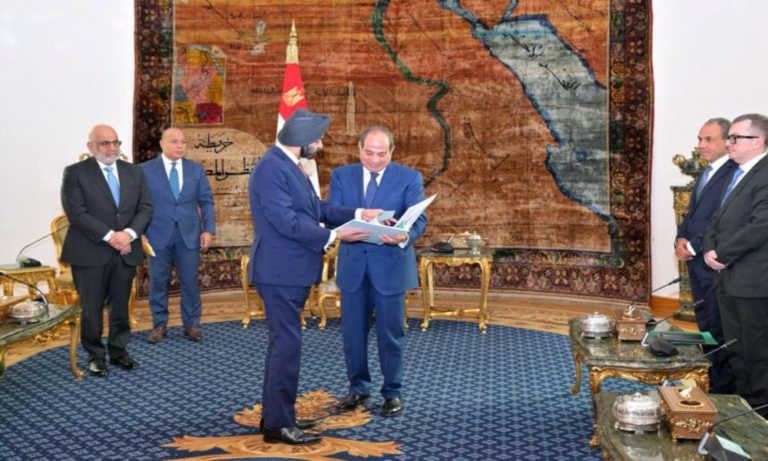
During a high-level meeting in Cairo on Monday, March 2, 2026, President Abdel Fattah Al-Sisi warned that regional instability has cost the Suez Canal Authority approximately $10 billion in lost revenue over recent years.
Speaking with World Bank Group President Ajay Banga, Al-Sisi highlighted the severe economic strain caused by the war in Gaza and the subsequent disruptions to Red Sea maritime traffic. These tensions have forced major shipping lines to bypass the canal, significantly impacting Egypt’s primary source of foreign currency.
Beyond the maritime crisis, the President emphasized the growing fiscal burden of hosting roughly 10.5 million foreigners displaced by regional conflicts. He noted that these individuals are provided with public services, including healthcare and education, on par with Egyptian citizens. Al-Sisi pointed out that Egypt carries this multi-billion dollar responsibility without sufficient external financial support, a challenge that World Bank officials acknowledged during the discussions.
Despite these headwinds, the meeting reaffirmed Egypt’s commitment to its structural reform agenda. The President reviewed ongoing efforts to stabilize the foreign exchange market, control inflation, and reduce public debt in coordination with the International Monetary Fund. He also highlighted the success of social safety nets like the “Decent Life” and “Takaful and Karama” programs, which aim to shield vulnerable populations from global economic shocks while advancing the nation’s 2030 Sustainable Development Goals.
Ajay Banga commended Egypt’s resilience and its strategic role as a pillar of regional stability. The World Bank reiterated its support for projects focused on climate resilience, food security, and private sector empowerment. While the Suez Canal has shown early signs of a revenue rebound in early 2026 following recent ceasefire efforts, both leaders agreed that a permanent resolution to regional conflicts remains essential for the long-term health of the global energy market and Egyptian economic growth.
MK/AK/te/fss/abj/APA