



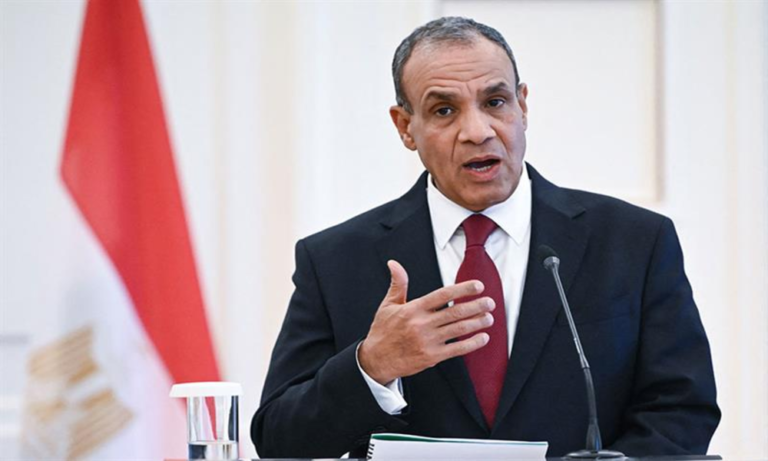
The foreign ministers of Egypt, Saudi Arabia, and the United Arab Emirates have called for strengthened Arab solidarity in the face of regional crises, while emphasising that diplomacy is the only way to resolve the escalating tensions surrounding Iran.
Egyptian Foreign Minister Badr Abdelatty traveled to Saudi Arabia on Tuesday for talks with his Saudi and Emirati
counterparts, against a backdrop of escalating tensions in the region.
According to an official statement, the mission aimed to coordinate Arab positions in order to preserve collective national security in the face of the crises shaking the Middle East.
At the heart of the talks was the Iranian issue, against a backdrop of escalating rhetoric and military tensions between Washington and Tehran.
explicitly advocating for “the diplomatic path” as the only alternative to a confrontation with potentially serious regional consequences.
The stated objective is to relaunch negotiations that could lead to a comprehensive, balanced agreement that addresses the security concerns of all parties.
This stance comes as Washington is sending increasingly firm signals toward Tehran, raising the possibility of military action and reinforcing its presence in the Gulf. While Egypt’s call for a de-escalation is in line with a tradition of cautious diplomacy, it also underscores the limited room for manoeuvre available to Arab capitals in the face of a confrontation largely driven by extra-regional dynamics.
During the meeting, Abdelatty spoke with Saudi Foreign Minister Faisal bin Farhan and his Emirati counterpart, Abdullah bin Zayed Al Nahyan. The three officials emphasised the need for unwavering Arab solidarity in the face of the escalating crisis, believing that only political and diplomatic solutions can prevent the region from descending into chronic instability.
Over Sudan, Abdelatty reiterated Cairo’s consistent position in favour of the unity of the state and its institutions, calling for a political solution led exclusively by the Sudanese.
The Sudanese conflict, which has pitted the regular army against the paralmilitary Rapid Support Forces since April 2023, remains a regional point of friction, particularly due to both parties receiving the backing of different foreign powers.
foster a lasting ceasefire and guarantee humanitarian access to civilian populations, illustrating a clear diplomatic convergence, but one still marked by profound geopolitical realities.MK/AK/fss/as/APA