



Equatorial Guinea has officially launched its national malaria elimination strategy, titled “Vision 2030,” with the ambitious goal of eradicating the disease across the entire country by the end of the decade.
The initiative is backed by a $116 million fund, comprising $52 million from the Equatoguinean government and $64 million provided by international partners. This nationwide expansion is directly modeled on a highly successful two-decade health program conducted on Bioko Island, which served as a proving ground for public-private cooperation in disease control.
Health Minister Mitoha Ondo Ayecaba reported that the Bioko initiative yielded significant clinical breakthroughs, including an 83 percent reduction in malaria prevalence among children aged 2 to 14 and a 78 percent drop in overall transmission rates. Furthermore, the program facilitated a 78 percent decrease in mortality among children under five and a 77 percent reduction in anemia cases among pregnant women. By 2025, malaria prevalence on Bioko had fallen to a record low of 7.2 percent.
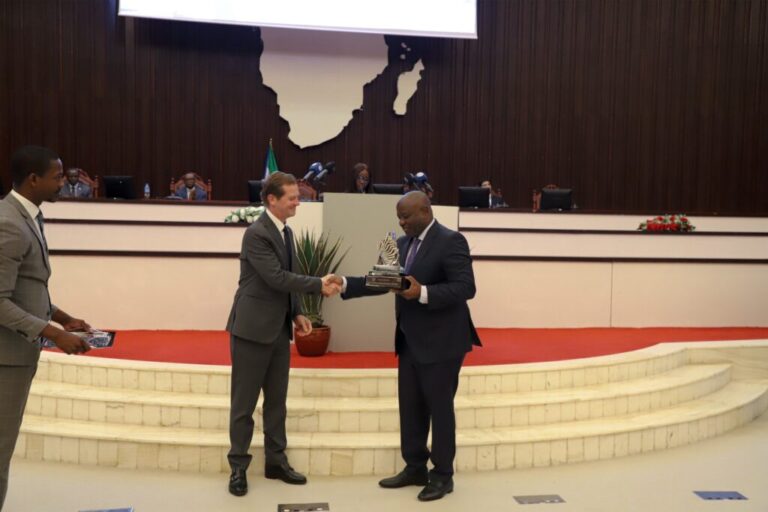
These outcomes were achieved through long-term collaboration between the Equatoguinean government, MCD Global Health, and major energy stakeholders like ConocoPhillips, which invested more than $130 million into the project over the last 20 years. The success of this model earned formal recognition at the 2025 African Energy Week, where ConocoPhillips was honored with the Corporate Social Responsibility Project of the Year award.
Executive Chairman of the African Energy Chamber, NJ Ayuk, noted that the Bioko experience highlights how strategic partnerships between the public sector, health organizations, and energy companies can create sustainable improvements in public health. With the launch of “Vision 2030,” authorities aim to scale these proven interventions to the mainland, hoping that the rigorous protocols used on Bioko will lead to the total elimination of malaria across Equatorial Guinea within the next five years.
TE/Sf/fss/abj/APA