





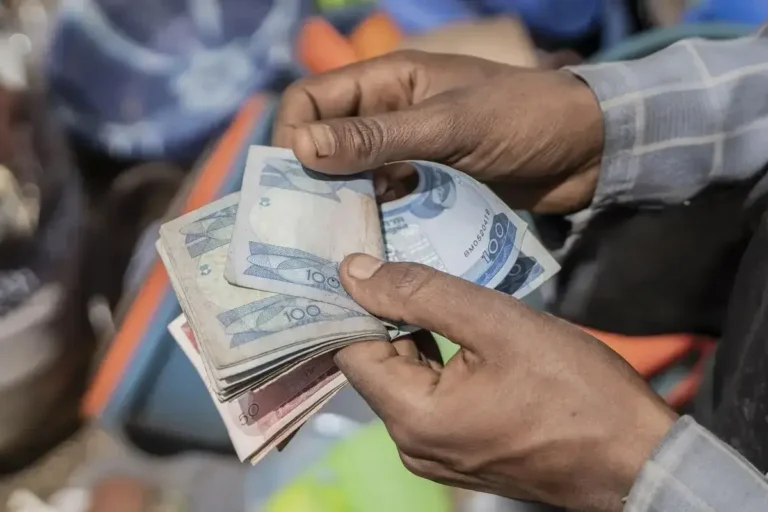
The National Bank of Ethiopia (NBE) said Ethiopia’s inflation rate has declined to 13.6 percent in August from above 17 percent in May 2025.
In a press release issued on Tuesday, the country’s inflation rate has seen a downward trend supported by the Bank’s tight monetary stance, improved agricultural output, and gradual adjustments in administered prices.
Food inflation dropped to 12.7 percent from 18.8 percent a year earlier, while non-food inflation slightly increased to 15.1 percent, partly due to exchange rate pass-through effects. Month-on-month inflation slowed to 1.1 percent, indicating moderate new price pressures.
Economic activity remained strong, underpinned by agricultural supply-side initiatives, growth in key industrial sectors aided by easing foreign exchange constraints, and robust exports of coffee, gold, and services such as air transport and tourism.
Some declines were observed in imports of semi-finished and consumer goods compared with the previous fiscal year. Monetary aggregates expanded, reflecting moderate easing of credit policies alongside fiscal and external developments.
Year-on-year growth in broad money and reserve money stood at 23.1 percent and 70.7 percent, respectively, while domestic credit rose 14 percent by the end of August 2025.
Banking system loans increased by 5.4 percent since June, and the growth in reserve money reflects NBE’s gold-related foreign exchange accumulation and the corresponding injection of local currency liquidity, though the credit cap limited broad money expansion.
Short-term market interest rates have been declining but remain close to the policy rate and positive in real terms, an encouraging sign for money market development.
Weighted average yields on 91-day Treasury Bills fell to 15 percent in August from 17.6 percent in June, while interbank rates improved to 13.7 percent, remaining within NBE’s interest rate corridor of 15 percent plus or minus three percentage points. Interbank transaction volumes reached Birr 945.1 billion as of October 2024.
The banking sector remained sound, with low non-performing loans and adequate capital, although certain segments faced liquidity pressures due to high loan-to-deposit ratios. The interbank money market and NBE’s Standing Lending Facility have helped ease these short-term challenges.
Fiscal policy during the review period was prudent and disciplined, with the government refraining from borrowing from NBE in the first two months of FY 2025/26, supporting the Bank’s tight stance.
The external sector continued strong performance following the comprehensive reform of July 2024, with growth in goods exports, remittances, and services helping to sustain current account and overall balance of payments surpluses.
The bank further said it will maintain a tight monetary policy stance and raise the credit growth target for the fiscal year 2025/26, according to a press release issued by the central bank on Monday.
Global inflation is expected to continue declining, with headline rates projected at 4.2 percent in 2025 and 3.6 percent in 2026. Tariffs may gradually influence U.S. consumer prices in the second half of 2025.
MG/as/APA